
Auto Insurance California Law: Penalties, Coverage, and Compliance
Understand California’s mandatory auto insurance laws to avoid fines and protect your finances. This guide explains minimum coverage, penalties, and key coverage options every driver needs.

By Lucas Reynolds
Driving in California means navigating iconic freeways and scenic coastlines, but it also requires a clear understanding of the state’s specific auto insurance laws. Failing to comply with California’s mandatory financial responsibility laws can lead to severe penalties, including fines, license suspension, and personal liability for damages. This guide provides a comprehensive overview of auto insurance California law, from the minimum coverage you must carry to the steps you must take after an accident. Knowing these rules is not just about legal compliance; it’s about protecting yourself, your assets, and everyone else on the road.
California’s Mandatory Minimum Liability Insurance
California law operates under a “fault” system for car accidents, meaning the driver who is found responsible for causing a crash is liable for the resulting damages. To ensure drivers can cover these costs, the state mandates that all vehicle owners carry a minimum amount of liability insurance. This coverage does not pay for your own injuries or vehicle damage; instead, it provides crucial financial protection for others if you are at fault in a collision. The legally required minimums are often referred to as 15/30/5 coverage.
These numbers represent thousands of dollars in coverage: $15,000 for bodily injury per person, $30,000 for bodily injury per accident, and $5,000 for property damage. It is critical to understand that these are only the absolute minimums required by law. Given the high cost of medical care and vehicle repairs in California, these limits can be exhausted quickly in a serious accident, leaving you personally responsible for any excess amount. For more robust protection, consider exploring options for the best full coverage car insurance in California to build a policy that truly safeguards your finances.
Proof of Insurance and Penalties for Non-Compliance
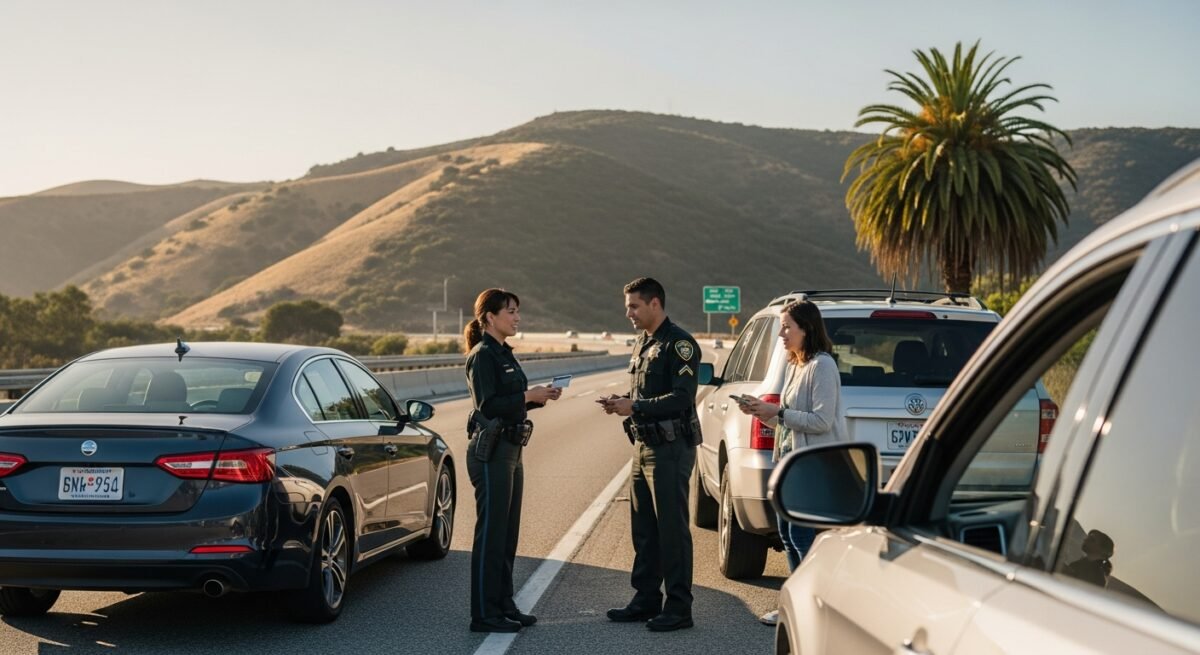
Simply purchasing a policy is not enough; you must also be able to prove you have it. California drivers are required to carry evidence of financial responsibility in their vehicle at all times. This is typically your insurance company’s issued proof-of-insurance card, which can be in physical or electronic form (such as on your smartphone). You must present this proof during a traffic stop, when registering your vehicle, and after an accident.
The penalties for driving without valid auto insurance in California are significant and escalate with repeated offenses. For a first offense, you face a fine of at least $100, plus fees and penalty assessments that can total over $450. Your vehicle may be impounded. For a second or subsequent offense within three years, the minimum fine increases to $200, with total costs soaring, and your driver’s license could be suspended for four years. Furthermore, to reinstate your license after a suspension, you must file an SR-22 certificate—a high-risk insurance document—for three years, which often leads to substantially higher auto insurance California cost.
Understanding Additional Coverage Options
While liability insurance fulfills your legal obligation, a comprehensive policy includes other valuable coverages that protect you directly. Understanding these options allows you to make informed decisions about your financial safety net.
Uninsured and Underinsured Motorist Coverage
California law requires insurance companies to offer you Uninsured Motorist (UM) and Underinsured Motorist (UIM) coverage. These are arguably some of the most important protections you can carry. UM coverage pays for your medical expenses, lost wages, and pain and suffering if you are hit by a driver with no insurance. UIM coverage applies when the at-fault driver’s liability limits are too low to cover your damages. Despite their value, you have the right to reject these coverages in writing. Given that not all drivers comply with the law, rejecting them is a considerable risk.
Comprehensive and Collision Coverage
If your vehicle is financed or leased, your lender will require you to carry both comprehensive and collision coverage, often called “physical damage” coverage. Collision pays for damage to your car from an impact with another vehicle or object, regardless of fault. Comprehensive covers non-collision incidents like theft, vandalism, fire, falling objects, or collisions with animals. For owners of older vehicles, the cost of these coverages may eventually exceed the car’s value, at which point you may choose to drop them. Finding the right balance between cost and protection is key, which is why many drivers seek out the cheapest auto insurance in California that still meets their needs.
The Claims Process and Your Legal Duties After an Accident
California law outlines specific duties for drivers involved in accidents. Fulfilling these duties is not only a legal requirement but also critical for the insurance claims process. First, you must stop immediately at the scene. If there are injuries, you must provide reasonable assistance and call 911. You are also required to exchange specific information with other involved drivers and provide your information to any injured persons or property owners. This information includes your name, address, driver’s license number, vehicle registration number, and evidence of financial responsibility (insurance).
You must also report the accident to the California Department of Motor Vehicles (DMV) within 10 days if the crash resulted in injury, death, or property damage exceeding $1,000. Failure to file this SR-1 report can lead to license suspension. When initiating an insurance claim, be prepared to provide a clear, factual account of the incident. Cooperation with your insurer is a condition of your policy. Disputes over fault or the value of a claim are common. In such cases, the detailed evidence you gather at the scene—photos, witness statements, a police report—becomes invaluable.
Frequently Asked Questions
Can I use a digital insurance card on my phone in California?
Yes, California law expressly permits the use of electronic proof of insurance. A photo or PDF of your insurance card on a smartphone or other electronic device is considered valid evidence of financial responsibility.
What are my options if I cannot afford standard auto insurance?
California offers a Low-Cost Auto Insurance (CLCA) program for income-eligible drivers. This program provides the state’s minimum liability coverage at a reduced price. It is designed to help more drivers achieve legal compliance and financial responsibility.
Is California a “no-fault” insurance state?
No, California is an “at-fault” or “tort” state. This means the driver who causes the accident is financially responsible for damages. The injured party can file a claim with the at-fault driver’s insurance company or pursue a personal injury lawsuit.
What happens if I lend my car to a friend and they get into an accident?
In California, insurance typically follows the vehicle, not the driver. If you give someone permission to drive your insured car, your insurance policy is generally primary, meaning it will respond first in the event of an accident they cause.
Navigating auto insurance California law is a fundamental responsibility for every driver in the state. By maintaining at least the minimum required coverage, carrying proof of insurance, and understanding your duties after an accident, you protect your driving privileges and your financial future. Regularly reviewing your policy to ensure your coverage limits align with your assets and risk tolerance is a prudent step in responsible vehicle ownership. The law sets the baseline, but informed choices about your coverage create true security on the road.