
Car Accident Insurance Checklist: 7 Steps to Protect Your Claim
Use this car accident insurance checklist to protect your claim from the scene to settlement. Call (833)-214-6397 for guidance on coverage questions.

By Noah Bramwell
A fender bender lasts seconds, but the decisions you make in the next hour can shape your insurance claim for months. One missed photo, an apologetic comment, or a delayed phone call can turn a straightforward collision into a disputed mess. That is why drivers need a clear mental script before anything goes wrong. A practical car accident insurance checklist gives you that script, so you act instead of panic when adrenaline is running high. This guide walks through exactly what to do after a crash, from securing the scene to tracking medical bills, with the insurance implications of each step explained along the way.
First Priority: Safety, Positioning, and Emergency Help
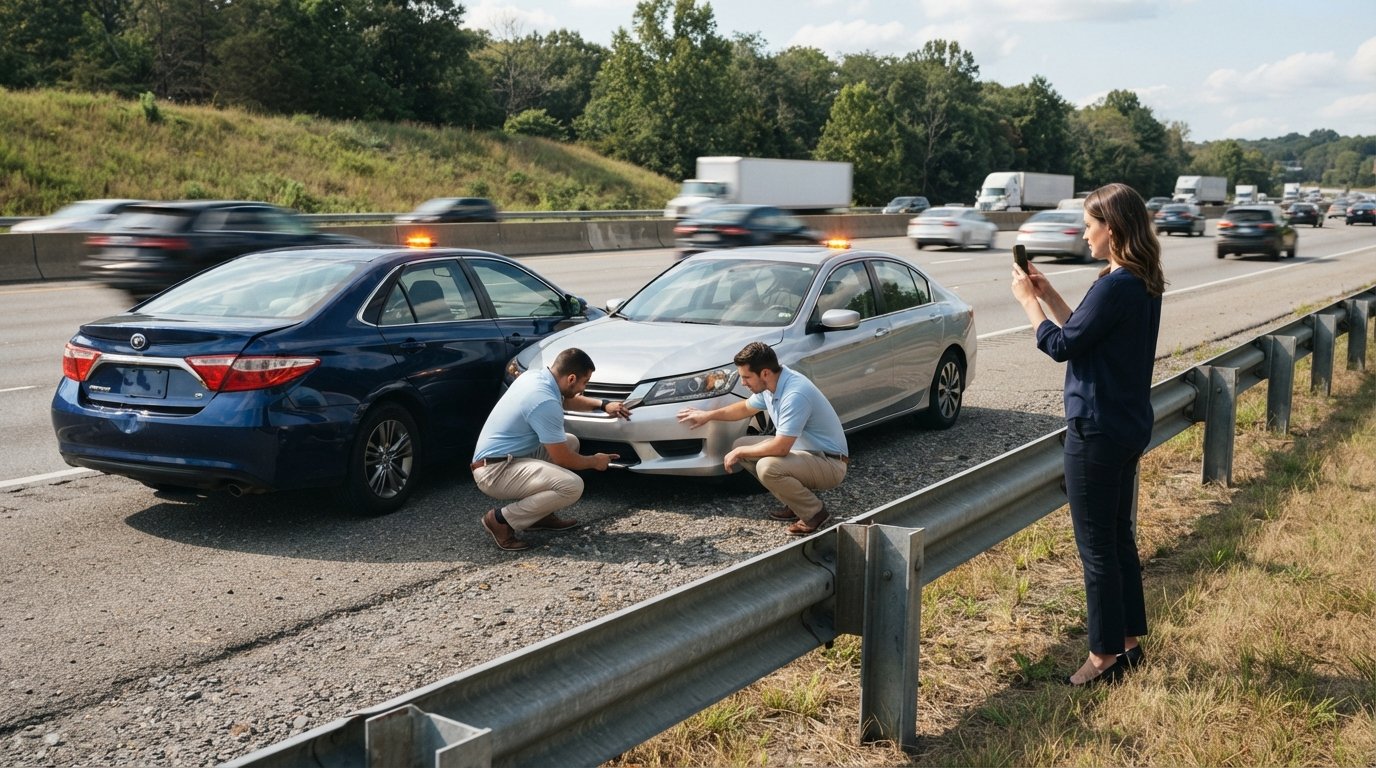
Before anything else, move yourself and your passengers out of harm's way. If the vehicles are drivable and traffic is moving, pull onto the shoulder or into a nearby parking lot and turn on your hazard lights. On a busy highway, this single step prevents secondary collisions, which are often more severe than the original impact. If the cars cannot move, stay inside with seatbelts fastened and call 911.
Check for injuries before you think about paperwork. Even a low-speed crash can cause whiplash or a concussion, and symptoms sometimes appear hours later. Call emergency services if anyone reports pain, dizziness, or confusion. When you speak with responders, describe your symptoms honestly and completely. Their report becomes part of the official record, and it can support your injury claim later if the other driver disputes fault.
Once injuries are addressed, secure the scene. Set up warning triangles or cones if you have them, and keep everyone away from the travel lanes. Do not smoke near the vehicles, and do not attempt to move an injured person unless there is immediate danger such as fire. Safety comes before documentation, every time.
Exchange Information and Photograph Everything Safely
After the scene is secure, collect the details you will need for your claim. This is the heart of any post-accident insurance checklist. Ask the other driver for their full name, phone number, address, driver's license number, license plate, and insurance company and policy number. Also note the make, model, color, and VIN of their vehicle. If there are passengers in the other car, do not press them for details, but do observe and record how many people were present.
If the other driver refuses to share information or becomes aggressive, do not argue. Return to your vehicle, lock the doors, and wait for police. A refusal to exchange information is itself worth documenting and reporting. Whatever happens, never agree to handle the damage privately or accept cash on the spot, because a private settlement can void your ability to file a claim if hidden damage or injuries surface later.
Photographs are your strongest defense against disputed facts. Use your phone to capture the following before vehicles are moved, weather and lighting permitting:
- Wide shots of all vehicles in their final positions, including lane markings and traffic signals
- Close-ups of damage to each vehicle from multiple angles
- License plates, VINs, and the other driver's insurance card
- The road surface, skid marks, debris, and any weather hazards
- Visible injuries to you or your passengers
Also look for witnesses. Bystanders who saw the crash can be invaluable if liability is disputed. Ask for names and phone numbers, and note where they were standing. If a nearby business has cameras facing the street, jot down the name and address so your insurer or attorney can request footage before it is overwritten. Many businesses retain video for only a few days, so this step is time-sensitive.
When to Call Police and How the Report Supports Your Claim
Many states require drivers to report crashes involving injury, death, or property damage above a certain dollar threshold. Even when reporting is optional, calling the police is usually the safer choice. A police report creates an independent, third-party account of the incident, complete with the responding officer's observations about road conditions, damage, and any citations issued. Insurers weigh that report heavily when determining fault.
Call 911 immediately if there are injuries, the other driver appears impaired or flees, or a vehicle blocks traffic. For minor collisions on private property, you may be able to file a report at a police station afterward, but do so promptly. When the officer arrives, stick to facts: what you saw, what you heard, and what you felt. Avoid guessing about speed or distance, and avoid speculating about who caused the crash. If you are asked whether you are injured and you are unsure, say you are not sure yet rather than no.
Ask the responding officer for the report number and the agency name. In some jurisdictions, you can download the report online within a few days. Review it for errors once it is available, because mistakes about your name, the location, or the damage description can complicate your claim. If you find an error, contact the records department to request a correction.
Notify Your Insurer, and Be Careful With the Other Driver's Insurer
Report the accident to your own insurance company as soon as practical, even if you believe the other driver was at fault. Most policies require prompt notice as a condition of coverage, and delays can give an insurer grounds to question the claim. When you call, have your policy number, the police report number, and the other driver's information ready. Describe what happened factually and briefly. You do not need to speculate about fault, and you should not accept blame on the phone.
Your own insurer may handle the claim in one of two ways. If you have collision coverage, you can file through your policy and pay your deductible, and your insurer may pursue the other driver's insurer for reimbursement later. If you do not have collision coverage, you will likely need to file with the other driver's insurer directly. In that case, remember that the other insurer represents the other driver, not you. It may ask for a recorded statement, and anything you say can be used to reduce or deny your claim.
You are generally not obligated to give a recorded statement to the other driver's insurer, especially before you have consulted an attorney or fully understand your injuries. You can provide basic facts, such as the date, location, and vehicles involved, without agreeing to a recorded interview. If the adjuster pressures you, politely say you will follow up in writing. Keep a log of every call, including the date, the representative's name, and a summary of what was discussed. This record is valuable if a dispute arises later.
If you are shopping for a new policy after a crash, or simply want to understand how your current coverage compares, resources such as QuoteComparison can help you review auto insurance options side by side before you commit. Comparing quotes after an accident is wise, because a claim can affect your premium at renewal, and switching carriers may or may not be in your best interest depending on your record and state rules.
Document the Scene and Track Every Expense for Your Claim
Beyond photos at the scene, keep a running file of everything connected to the accident. Start with a written timeline: the time of the crash, when you called police, when you called your insurer, and when you first noticed pain. Memory fades quickly, and a contemporaneous record is far more credible than a reconstruction weeks later.
Medical documentation deserves special attention. Keep every receipt, explanation of benefits, and discharge summary. If you visit an emergency room, an urgent care clinic, or a chiropractor, record the date, provider, diagnosis, and treatment. Insurance adjusters evaluate injury claims based on medical records that show a continuous chain of treatment. Gaps in care are often used to argue that injuries were minor or unrelated to the crash. If you miss work because of the accident, ask your employer for a letter confirming the dates and lost wages, and keep pay stubs that show your normal earnings.
Your car also generates expenses that belong in the claim file. Save receipts for towing, rental cars, and storage fees. If your vehicle is declared a total loss, gather documentation of its pre-accident value, such as recent maintenance records and listings for comparable vehicles. These records support a fair settlement rather than the insurer's first offer, which is often negotiable.
For drivers in the Tar Heel State, the rules and rate factors can differ from national averages, and our guide to affordable health insurance in North Carolina explains how to approach coverage decisions when medical bills from a crash start arriving. Health coverage and auto medical payments coverage often interact, and understanding which policy pays first prevents duplicate claims and surprise balance bills.
Avoid These Common Post-Accident Mistakes
Most claim problems trace back to a handful of avoidable errors. The first is apologizing. Saying I am sorry at the scene can be interpreted as an admission of fault, even if you meant only sympathy. The second is posting about the crash on social media. Insurers routinely review public posts, and a photo of you hiking or a comment about feeling fine can undermine an injury claim. Keep the accident off your feeds until the claim is resolved.
Another frequent mistake is signing documents without reading them. A release or waiver offered by an insurer may settle the claim permanently, including for injuries you have not yet discovered. Never sign a release until you are confident your treatment is complete and you understand the full value of your claim. Similarly, do not accept the first settlement offer without reviewing it carefully. Initial offers are often based on incomplete medical records and can be negotiated upward with documentation.
Finally, do not let a minor crash lull you into skipping steps. Whiplash, soft-tissue damage, and hidden frame damage often appear days after impact. A thorough car accident insurance checklist exists precisely because the consequences of a crash are not always visible at the scene. Treat every collision as if a claim will be filed, and you will be prepared whether it is or not.
Frequently Asked Questions About Post-Accident Insurance Steps
How long do I have to report an accident to my insurer?
Time limits vary by policy and state, but prompt notice is always safest. Many policies require notice within a reasonable time, and some state laws set specific deadlines for accident reports and claims. Reporting within 24 to 48 hours is a practical standard, even for minor damage. If injuries prevent you from calling, ask a family member or friend to notify the insurer on your behalf and document why the report was delayed.
Should I give a recorded statement to the other driver's insurer?
You are usually not required to do so, and it is often wise to decline until you have gathered your records or consulted a professional. The other insurer's goal is to protect its policyholder, and a recorded statement can be used to minimize your claim. You can share basic facts in writing and defer the recorded interview until you understand your rights under your state's rules.
What if the other driver has no insurance?
If the at-fault driver is uninsured, your own uninsured motorist coverage may pay for your injuries and, in some states, property damage. Report the crash to your insurer and provide the police report showing the other driver's lack of coverage. If you do not carry uninsured motorist coverage, your options may include suing the driver directly, though collecting a judgment can be difficult. Reviewing your policy now, before an accident, is the best way to avoid this gap.
Does filing a claim always raise my premium?
Not always. Premiums are influenced by fault, your claims history, and state regulations. A not-at-fault claim may have little or no effect in some states, while an at-fault claim often does. Some insurers offer accident forgiveness for a first claim. Ask your agent how a specific claim would affect your rate before you decide whether to file, especially for damage that is close to your deductible.
Handling the aftermath of a collision is stressful, but a written checklist turns chaos into a sequence of manageable steps. Secure the scene, document everything, notify the right people, and track every expense. When you are ready to review your coverage or compare options for the road ahead, InsuranceShopping.com connects you with licensed agents and no-obligation quotes so you can make an informed decision about your auto, home, and health insurance needs.