
Caught Driving Without Insurance? Penalties and Next Steps
What happens if you drive without insurance and get caught? Fines, license suspension, and SR-22 filings can follow. Call (833)-214-6397 to compare quotes and avoid overpaying.

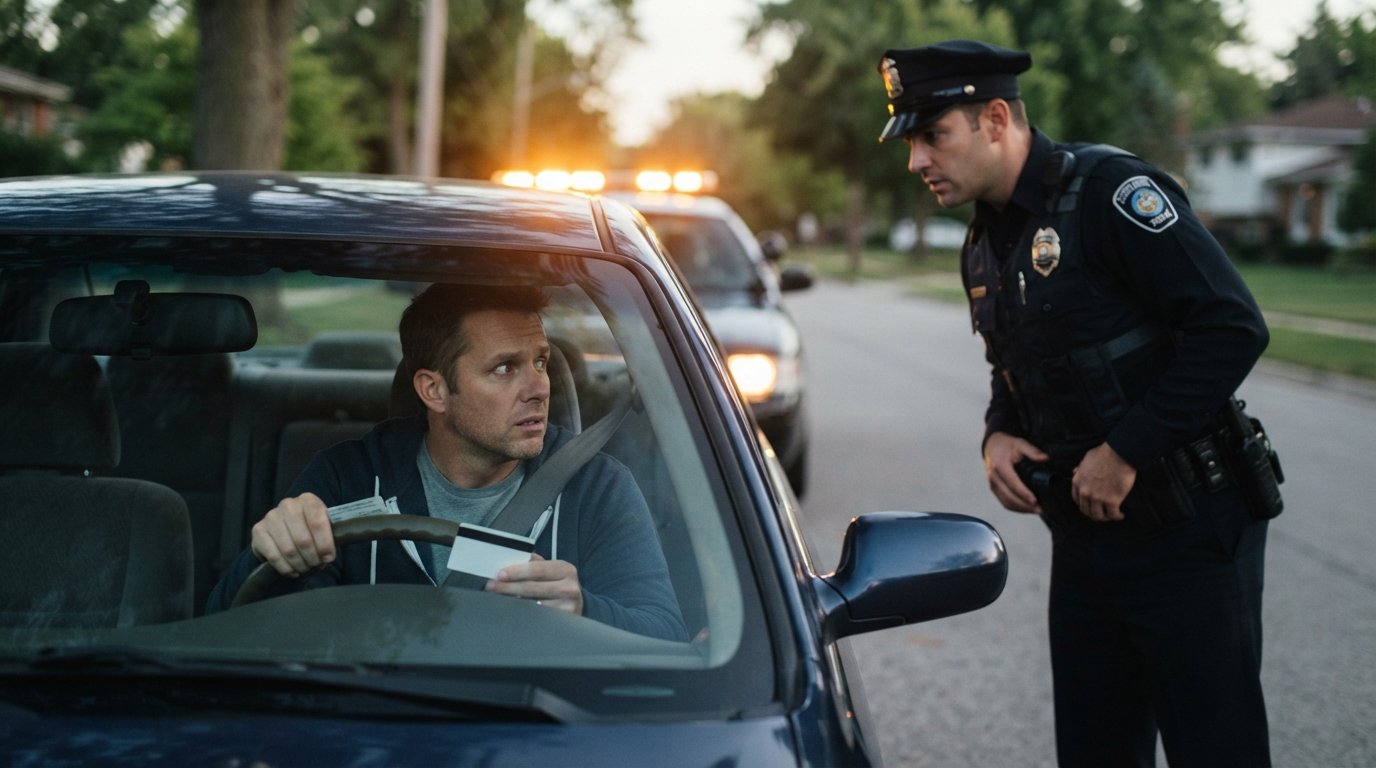
You glance in the rearview mirror, see flashing lights, and realize your proof of insurance card expired three weeks ago. Your heart races as you pull over, wondering what happens if you drive without insurance and get caught. The consequences are not just a ticket and a fine; they can ripple through your finances, your driving record, and your ability to get affordable coverage for years. Understanding the real penalties, the steps to recover, and how to find affordable premiums after a lapse can turn a stressful moment into a manageable process. This guide walks you through what to expect, from the first traffic stop to reinstating your license and shopping for new coverage.
What Happens if You Drive Without Insurance and Get Caught: The First Offense
Driving without insurance is illegal in every state except New Hampshire, which requires proof of financial responsibility but does not mandate traditional liability insurance. In the other 49 states and the District of Columbia, you must carry at least the minimum liability coverage. When you are caught without it, the penalties vary widely by jurisdiction, but most follow a predictable pattern. A police officer typically asks for your license, registration, and proof of insurance. If you cannot provide valid proof, you will likely receive a citation. In some states, the officer may allow you to present proof later in court, but that does not guarantee the ticket will be dismissed.
For a first offense, you can expect a combination of fines, fees, and administrative actions. The fine alone can range from $100 to over $1,000, depending on the state. For example, California imposes a fine between $100 and $200 for a first offense, but with penalty assessments and court costs, the total can exceed $500. Texas charges a fine of $175 to $350 for a first offense, while Florida imposes a $150 fine for a first violation but can suspend your license for up to three years if you are involved in a crash without insurance. New York levies fines of $8 to $15 per day for each day you were uninsured, up to a maximum of $150, and can suspend your registration.
Beyond the fine, you may face additional consequences that hit harder than the ticket itself. Many states suspend your driver's license and vehicle registration immediately or after a short grace period. You might also be required to file an SR-22 form, which is a certificate of financial responsibility that your insurer must submit to the state. This requirement typically lasts for three years and signals to insurers that you are a high-risk driver. In some states, your vehicle can be impounded or towed, and you will be responsible for the towing and storage fees. If you cause an accident while uninsured, you could be personally liable for all damages, including medical bills and property repair, with no insurance company to defend or indemnify you.
Typical State Penalties for a First Uninsured Offense
Because insurance laws are state-specific, the exact penalties for a first offense vary significantly. The table below summarizes common penalties in a few representative states, but you should always check your state's department of motor vehicles (DMV) or insurance department for precise figures and rules.
- California: Fine of $100 to $200 plus penalty assessments (often totaling $500 or more), possible license suspension, and requirement to file an SR-22 for three years.
- Texas: Fine of $175 to $350, license suspension, and $250 annual surcharge for three years to reinstate your license.
- Florida: $150 fine for first offense, license suspension until you provide proof of insurance, and reinstatement fees; repeat offenses can lead to a three-year suspension.
- New York: Fine of $8 to $15 per day of violation (max $150), license and registration suspension, and a civil penalty of $750 for failing to maintain coverage.
- Illinois: Minimum $500 fine, license suspension, and a $100 reinstatement fee; subsequent offenses carry higher fines and longer suspensions.
In addition to fines and suspensions, many states impose a surcharge or assessment that funds police and emergency services. These extra costs can double or triple the base fine. Some states also assign points to your driving record, which can increase your insurance premiums later. The table above is not exhaustive; for instance, states like Georgia and Michigan have their own penalty structures that can include community service or even jail time for repeat offenses. The key takeaway is that a first offense is rarely just a small fine; it often triggers a chain of administrative actions that require time and money to resolve.
SR-22 and Proof of Insurance Filing Requirements
One of the most persistent consequences of an uninsured driving conviction is the SR-22 requirement. An SR-22 is not an insurance policy itself; it is a certificate that your auto insurer files with the state to verify that you carry the required liability coverage. The form is typically filed electronically by your insurer, and it must remain active for a specified period, usually three years. If your policy lapses during that time, your insurer must notify the state, and your license or registration can be suspended again.
Getting an SR-22 often means you must purchase coverage from an insurer that is willing to file the form. Not all insurers offer SR-22 policies, and those that do may charge higher premiums because they view you as a higher risk. The SR-22 requirement itself does not set a minimum coverage amount, but you must maintain at least your state's minimum liability limits. In some states, you may also need to file an FR-44, which requires higher liability limits than the standard minimum. The cost of an SR-22 filing is usually a one-time fee of $15 to $50, but the real expense is the higher premium you will pay for the underlying policy.
Failing to maintain the SR-22 can lead to immediate suspension of your driving privileges. If you switch insurers, you must ensure the new insurer files a new SR-22 before canceling the old policy. A gap in coverage, even for a day, can trigger a notice to the DMV and result in a new suspension. Therefore, it is critical to coordinate the transition carefully. Many drivers find it helpful to work with a specialized insurance agent who understands SR-22 requirements and can ensure continuous coverage.
How a Lapse Affects Future Premiums
A lapse in insurance coverage, whether caught or not, can significantly affect your future auto insurance premiums. Insurers view a gap in coverage as a sign of financial instability or irresponsible driving behavior, and they often price accordingly. Even a one-day lapse can be flagged when you apply for new coverage, and many insurers ask for your continuous coverage history for the past six to twelve months. If they see a gap, they may charge a higher rate or decline to offer a standard policy altogether.
The impact on premiums varies by insurer and state, but studies show that drivers with a lapse can pay 10% to 50% more than those with continuous coverage. For example, a driver with a clean record might pay $1,200 per year, while a similar driver with a six-month lapse could be quoted $1,800 or more. The surcharge typically diminishes over time as you maintain continuous coverage, but it can take three to five years to fully disappear. In some states, insurers are not allowed to use a lapse as the sole reason for increasing rates, but they can consider it as part of a broader risk assessment.
Beyond the lapse itself, the uninsured driving violation may also appear on your motor vehicle record (MVR). Points or violations on your MVR can further increase your premiums. For instance, a DUI or reckless driving conviction can raise rates by 50% or more, and an uninsured driving violation may add 10% to 30% depending on the state and insurer. If you are required to file an SR-22, the combination of the lapse and the filing requirement can make you a high-risk driver in the eyes of insurers, leading to even higher premiums.
Steps to Reinstate Your License and Registration
If your license or registration has been suspended due to an uninsured driving violation, you will need to take specific steps to get back on the road legally. The process varies by state, but the following framework generally applies. First, you must obtain proof of insurance that meets your state's minimum liability requirements. You may need to purchase a new policy or reinstate an existing one. If an SR-22 is required, ensure your insurer files it with the DMV.
Second, pay any fines, fees, or surcharges associated with the violation. This may include a reinstatement fee, which can range from $25 to $500, and any court costs. Some states also require you to pay a civil penalty or an annual surcharge for a set period. Third, provide the DMV with all required documentation, which may include proof of insurance, the SR-22 form, and a copy of your driving record. Fourth, you may need to pass a written or driving test if your license was revoked rather than suspended. Finally, once all requirements are met, the DMV will issue a new license or registration.
The timeline for reinstatement can range from a few days to several weeks, depending on the state's processing times and whether you have completed all requirements. It is important to follow up with the DMV to confirm that your SR-22 has been received and that your suspension has been lifted. Driving while suspended is a separate offense with even harsher penalties, including possible jail time and vehicle impoundment. Therefore, do not attempt to drive until you have received official confirmation that your license is valid.
Finding Coverage After a Lapse Without Overpaying
Finding affordable coverage after a lapse requires a strategic approach. Because insurers view you as a higher risk, you may face higher quotes, but that does not mean you have to accept the first offer. Start by shopping around and comparing quotes from multiple insurers. Use online comparison tools to get a broad view of available rates. Companies that specialize in high-risk drivers, sometimes called non-standard insurers, may offer more competitive rates than standard carriers for someone with a lapse or SR-22 requirement.
Improve your chances of getting a lower rate by cleaning up your driving record where possible. Pay any outstanding fines, complete defensive driving courses if offered by your state, and maintain continuous coverage from this point forward. A defensive driving course can often reduce points on your record and may qualify you for a discount. Additionally, consider raising your deductible or reducing optional coverages to lower your premium, but be careful not to sacrifice essential liability protection. If you are struggling to find affordable coverage, a licensed insurance agent can help you navigate the market and identify insurers that are more lenient with lapses.
For drivers with no credit history, finding affordable car insurance can be even more challenging, as many insurers use credit-based insurance scores in their pricing. Our guide on best car insurance for new drivers with no credit history explains how to build a positive insurance profile and find competitive rates. You can also use a resource like QuoteComparison to compare quotes from multiple insurers side by side and identify the best value for your situation.
Protecting Yourself from Future Gaps
The best way to avoid the penalties and premium increases associated with driving without insurance is to maintain continuous coverage. Set up automatic payments or calendar reminders for your premium due dates. If you are switching insurers, coordinate the start date of the new policy with the end date of the old one so there is no gap. If you are temporarily not using your vehicle, consider a non-owner policy or a storage policy that maintains liability coverage without the full cost of a standard policy. Some states allow you to surrender your plates and registration to avoid penalties during a period of non-use, but you must follow the proper procedure.
If you are facing financial hardship, do not simply let your policy lapse. Many insurers offer payment plans or grace periods. Contact your insurer to discuss options before the due date. In some cases, you may be able to lower your coverage to the state minimum or increase your deductible to reduce your premium. The key is to stay insured, even if at a lower level, to avoid the much higher costs of a lapse. Remember that the consequences of driving without insurance go beyond a single ticket; they can affect your ability to drive, your finances, and your peace of mind. For a seamless way to compare auto insurance options and find affordable coverage, visit InsuranceShopping.com's auto insurance comparison tool to get started.
By understanding what happens if you drive without insurance and get caught, you can make informed decisions and take steps to protect yourself. Whether you are dealing with a recent citation or simply want to avoid future problems, the path forward involves obtaining coverage, complying with state requirements, and shopping strategically for the best rate. With the right approach, you can move past a lapse and regain financial stability on the road.