
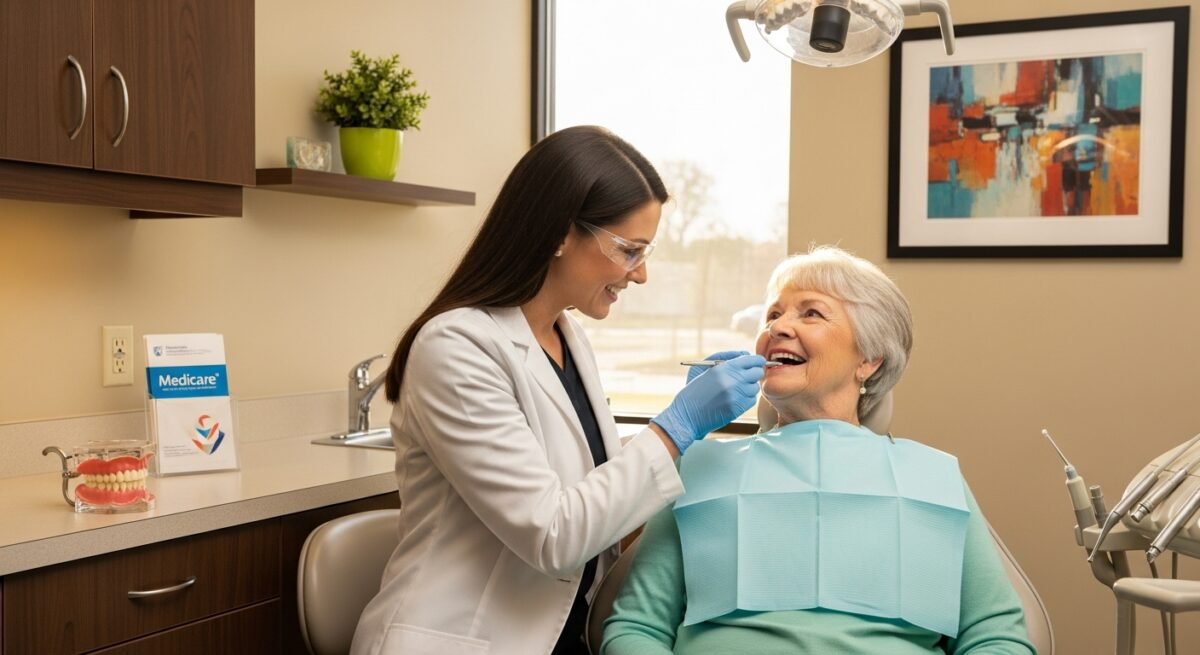
Does Medicare Cover Dental? Insurance Plans for Senior Oral Health
Original Medicare leaves a major gap for dental care, but seniors have options. Learn how to find affordable coverage for cleanings, fillings, and dentures.

By Lucas Reynolds
Maintaining good oral health is a critical component of overall wellness, yet for many seniors, accessing affordable dental care presents a significant financial challenge. The question of whether Original Medicare provides dental coverage often leads to confusion and unexpected out-of-pocket expenses. Traditional Medicare Part A (hospital insurance) and Part B (medical insurance) offer extremely limited, if any, coverage for routine dental care, leaving a substantial gap in health benefits for older adults. This gap means that procedures like cleanings, fillings, extractions, and dentures are typically paid for entirely by the beneficiary. Understanding the landscape of supplemental dental insurance options for seniors on Medicare is not just about preserving a smile, it is about preventing serious health complications, managing chronic conditions, and ensuring quality of life.
The Limitations of Original Medicare for Dental Care
It is essential to start with a clear understanding of what standard Medicare does and does not cover. Original Medicare (Parts A and B) is designed primarily for medically necessary hospital and physician services. Its approach to dental care is narrowly focused on emergencies or situations where dental health is directly tied to a covered medical procedure. For instance, Medicare Part A may cover a dental exam performed in a hospital prior to a heart valve replacement or a kidney transplant, given the high risk of infection. Similarly, Medicare Part B might cover the extraction of teeth directly in the path of radiation treatment for jaw cancer. However, the subsequent dental care needed to restore function after such an extraction, such as dentures, would not be covered.
This leaves the vast majority of routine and preventive dental services uncovered. Seniors are personally responsible for the full cost of exams, X-rays, cleanings, fillings, root canals, crowns, bridges, dentures, and implants. Given that dental costs can easily run into thousands of dollars, this out-of-pocket burden can force difficult choices between oral health and other necessities. The financial strain is compounded by the fact that many seniors live on fixed incomes. Without a dedicated dental plan, even a single unexpected procedure like a crown or extraction can derail a monthly budget. For a deeper dive into what Medicare does and does not include, our resource on Medicare dental coverage details breaks down the specific inclusions and exclusions.
Pathways to Dental Coverage for Medicare Beneficiaries
Fortunately, seniors are not without options. Several pathways exist to obtain dental insurance or discounted dental care. The main avenues include Medicare Advantage plans, standalone Dental Insurance plans, and Dental Discount Plans. Each has distinct structures, costs, and benefits, requiring careful comparison based on individual health needs, budget, and geographic location.
Medicare Advantage (Part C) Plans with Dental Benefits
Medicare Advantage plans, offered by private insurance companies approved by Medicare, bundle Part A, Part B, and usually Part D (prescription drugs) into one plan. A significant number of these plans include added benefits not found in Original Medicare, with dental coverage being one of the most popular. The scope of dental benefits in a Medicare Advantage plan can vary dramatically. Some plans may offer only very basic preventive care, such as two cleanings and an exam per year, with a low annual maximum (e.g., $1,000). Others might provide more comprehensive coverage, including fillings, extractions, and even a percentage toward major work like crowns or dentures.
It is crucial to read the plan’s Evidence of Coverage document carefully. Key factors to evaluate include the network of dentists (HMO plans typically require you to use in-network providers, while PPO plans offer more flexibility at a higher cost), waiting periods for certain procedures, annual benefit maximums, and copayment/coinsurance amounts. Enrolling in a Medicare Advantage plan with dental means your dental coverage is integrated with your overall health plan, which can simplify administration. However, you must continue paying your Medicare Part B premium in addition to any premium the Advantage plan charges.
Standalone Dental Insurance Plans
For those who prefer to keep Original Medicare, or whose chosen Medicare Advantage plan does not include adequate dental benefits, purchasing a standalone dental insurance policy is a common alternative. These are private insurance plans specifically for dental care. They typically operate with a network of dentists, annual premiums, deductibles, copays/coinsurance, and most importantly, an annual benefit cap. Common structures include 100% coverage for preventive care, 80% for basic procedures (fillings, simple extractions), and 50% for major procedures (crowns, bridges, dentures), up to the plan’s annual maximum, which often ranges from $1,000 to $2,500.
When shopping for a standalone plan, seniors should pay close attention to waiting periods. Many plans impose waiting periods of 6 to 12 months for basic services and 12 to 24 months for major services, meaning you cannot get full coverage for those procedures immediately upon enrollment. This makes planning ahead crucial. Furthermore, these plans may have exclusions for pre-existing conditions, though this is less common in dental insurance than in medical insurance. Comparing the best dental insurance for seniors on Medicare involves weighing premiums against potential out-of-pocket costs for your expected needs.
Dental Savings Plans (Discount Plans)
Not technically insurance, dental savings or discount plans provide an alternative model. For an annual membership fee, you gain access to a network of dentists who have agreed to provide services at a reduced, pre-negotiated rate. There are no annual maximums, claim forms, or waiting periods. You simply pay the discounted fee directly to the dentist at the time of service. This can be an excellent option for seniors who need major work done immediately or who anticipate costs that would exceed the low annual maximums of many insurance plans.
The value of a discount plan hinges entirely on the size and quality of its network and the depth of the discounts offered (typically 15% to 50%). It is vital to check that your preferred dentist is in the plan’s network or that there are several highly-rated participating dentists in your area. While a discount plan does not provide the same financial risk protection as insurance (since you pay the full discounted amount), it can lead to substantial savings, especially for costly procedures. For a comprehensive look at all supplemental options, our Medicare supplemental dental insurance guide compares plans, costs, and benefits in detail.
Key Factors in Choosing a Dental Plan
Selecting the right dental coverage requires a personalized assessment. Start by evaluating your current oral health and anticipated needs. Do you have strong, healthy teeth needing only preventive care? Are you managing several old fillings or crowns that may need replacement? Are dentures or implants a possibility in the near future? Your dental history is the best predictor of future needs. Next, consider your budget. Calculate the total annual cost of any plan, which includes the premium plus your estimated out-of-pocket expenses for deductibles, copays, and services not fully covered.
Always review the provider network. If you have a trusted dentist you wish to keep, verify their participation in the plan’s network. If you are open to a new dentist, assess the network’s breadth and the quality of its providers in your locale. Finally, scrutinize the plan’s fine print: the annual maximum benefit, waiting periods for different service tiers, and any exclusions for specific procedures. A plan with a slightly higher premium but a much higher annual maximum might be far more valuable if you require significant dental work. For more personalized insights, you can always Read full article on tailored strategies for senior dental care.
Frequently Asked Questions
Q: Are there any free or low-cost dental care options for seniors on Medicare?
A: Yes, several options exist for seniors with limited income. Federally Qualified Health Centers (FQHCs) provide sliding-scale fees based on income. Many dental schools have clinics where supervised students perform procedures at a significantly reduced cost. Some states offer limited dental benefits through Medicaid for eligible low-income seniors, though adult dental Medicaid coverage is often minimal. Local non-profit organizations and charities may also host periodic free dental clinics.
Q: Can I use a Health Savings Account (HSA) to pay for dental expenses?
A: If you have a qualified High-Deductible Health Plan (HDHP) and an HSA, you can use HSA funds tax-free to pay for qualified medical expenses, which include most dental care services for the diagnosis, treatment, and prevention of disease. This includes payments to dentists for treatments, as well as for dental insurance premiums in some cases.
Q: I need major dental work soon. Which type of plan is best?
A: If you need major work immediately, a traditional insurance plan with waiting periods may not be helpful. In this scenario, a dental discount plan (with no waiting periods) could provide instant savings. Alternatively, you could explore financing options through dental offices or third-party healthcare credit cards, though these often carry high interest rates. It may also be worth getting treatment estimates and comparing them to the projected costs of different plans over time.
Q: Does Medigap (Medicare Supplement Insurance) cover dental care?
A: Standard Medigap plans (Plans A through N) do not cover routine dental care. They are designed to cover Medicare-approved costs like copayments, coinsurance, and deductibles for services already covered by Original Medicare. Since Original Medicare does not cover routine dental, Medigap does not either. A few insurers may offer optional, separate dental discount programs as an add-on to a Medigap policy, but this is not standard coverage.
Securing appropriate dental insurance is a vital step in comprehensive health planning for seniors. By thoroughly evaluating the options, from Medicare Advantage add-ons to standalone policies and discount plans, you can find a solution that protects both your oral health and your financial well-being. Proactive management of dental care prevents minor issues from becoming major, costly health problems, ensuring that your golden years are spent smiling with confidence and comfort.