
Home Safety Upgrades That Lower Homeowners Insurance
Smart safety upgrades can trim your home premium and prevent costly claims. Call (833)-214-6397 to compare carriers and confirm which discounts apply.

By Adrian Foxe
Your homeowners insurance premium is not set in stone. While factors like location and home age carry weight, the safety features you install can meaningfully influence what you pay each year. Many carriers offer discounts for wind mitigation, water leak detection, and monitored security, yet a large share of homeowners never claim them. The result is a quiet overpayment that repeats every renewal cycle. This guide explains which home safety upgrades that lower homeowners insurance premiums are worth the investment, how much you might save, and how to document your work so your insurer actually applies the credit.
Before spending a dollar, it helps to understand how insurers think. Underwriters price risk, and anything that reduces the likelihood or severity of a claim reduces risk. A storm-rated roof, a smart shutoff valve, or a monitored alarm each changes the math. The trick is matching the upgrade to the risks your policy actually covers and then proving the work was done to code. A contractor invoice and a few photos are often enough to trigger a re-rate, but only if you ask.
Why Insurers Reward Safety Upgrades
Homeowners claims are expensive, and insurers know that a single burst pipe or hail event can wipe out years of premium. When you install protective features, you shift some of that risk away from the carrier. In return, many companies offer credits that range from a few percent to well over 20 percent of the premium, depending on the feature and the state.
The savings are not automatic. Discounts live in the policy rating engine, and they only apply when the insurer knows the feature exists. That is why documentation matters as much as installation. A new impact-rated roof that never gets reported to your agent earns you nothing at renewal. The same logic applies to water sensors and security systems: the credit exists, but you have to claim it.
It also pays to ask which upgrades your specific carrier recognizes. Discount schedules vary widely by company and region. A feature that earns a healthy credit in Florida may earn nothing in Ohio. A quick call to your agent before you buy can prevent an expensive upgrade that never pays back.
Roofing and Storm Protection for Wind-Prone Areas
In hurricane and hail states, the roof is the single most important safety feature on the home. Impact-rated roofing materials, often labeled Class 4, are designed to resist hail and wind-driven debris. Many carriers offer meaningful credits for Class 4 shingles or metal roofing, and some states require insurers to recognize the discount. If your roof is older or unrated, upgrading can pay for itself over time through lower premiums and fewer claims.
Storm shutters and impact-resistant windows work the same way. In coastal regions, wind mitigation inspections often focus on opening protection, roof-to-wall connections, and secondary water barriers. A home that passes these checks can qualify for a wind mitigation credit that trims a substantial slice off the wind portion of the premium. The key is to request the inspection and submit the report, because carriers will not assume the features exist.
Homeowners in inland states should not skip this section. Hail is a major driver of roof claims across the Midwest and Plains, and Class 4 shingles often earn credits there too. The upgrade cost varies, but the combination of a longer-lasting roof and a recurring discount usually makes the math work. Ask your contractor for the product rating documentation so you can forward it to your insurer.
Water Leak Sensors and Automatic Shutoff Valves
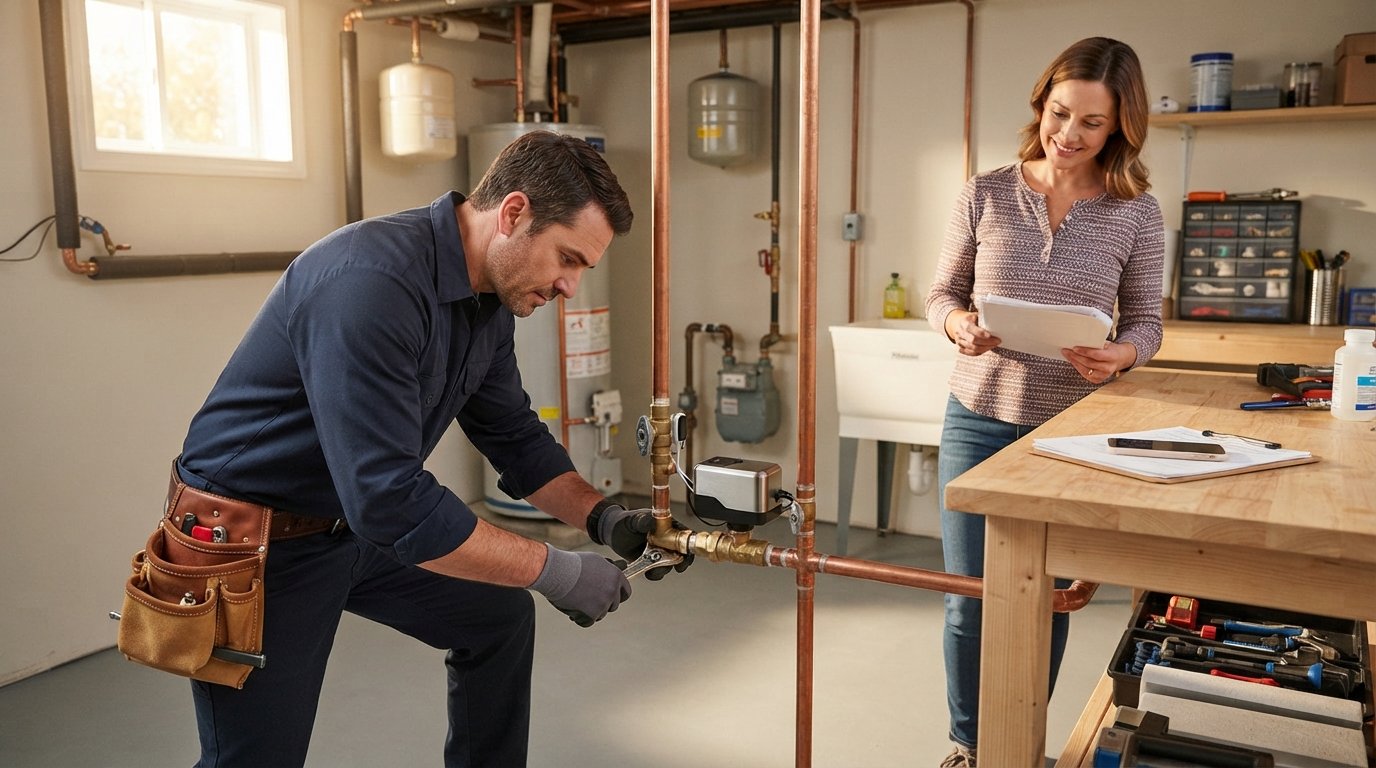
Water damage is one of the most common and costly homeowners claims, and it is largely preventable. Smart leak sensors placed near water heaters, washing machines, and under sinks can alert you the moment moisture appears. Automatic shutoff valves go further: they detect abnormal flow and close the main supply before a small leak becomes a flooded basement. Many carriers now offer discounts for these devices, and some will not write certain older homes without them.
The savings come in two forms. First, a direct premium credit for having the device installed. Second, a reduction in claim severity that keeps your loss history clean, which protects your rate at renewal. A single avoided claim can be worth more than years of discounts, so the payoff is often larger than the sticker credit suggests.
Installation is straightforward for a plumber and usually takes less than a day. Keep the receipt and the device model number, because insurers may ask for proof of professional installation. If you install a DIY sensor kit, confirm with your carrier that self-installed devices qualify, since some discount programs require a licensed installer.
Security Systems, Smart Doorbells, and Camera Discounts
Burglary protection is another area where insurers offer credits, but the size of the discount depends on the type of system. A professionally monitored alarm that reports to a central station typically earns a larger credit than a self-monitored smart doorbell. Cameras and smart locks can add a smaller discount or help you qualify for a bundled smart-home credit.
Before buying, ask your agent which tier your carrier recognizes. Some companies offer three levels: local alarm, central-station monitoring, and central-station monitoring with cellular backup. The difference in credit between tiers can be significant, so it is worth choosing a system that meets the top tier if you are installing one anyway. Also confirm whether the discount requires a monitoring contract, since the ongoing fee may offset part of the savings.
Smart doorbells and cameras are still valuable even when the direct credit is small. They deter package theft, document incidents, and can help resolve liability disputes. Treat the premium discount as a bonus rather than the primary reason to buy, and you will make a better decision.
How to Document Upgrades and Request a Re-Rate
Documentation is where most homeowners leave money on the table. Insurers do not monitor your home, so the burden is on you to report improvements. The process is simple if you follow a clear sequence.
- Collect proof: contractor invoices, permits, product specification sheets, and dated photos of the installation.
- Contact your agent or carrier and ask for a policy re-rate based on the new safety features.
- Submit the documentation and request written confirmation of the new premium and the discount applied.
- Review your declarations page at renewal to confirm the credit is still active.
Timing matters. Most carriers will apply a mid-term re-rate, but some only adjust at renewal. Ask which applies to your policy so you know when to expect the change. If you are shopping for a new policy, mention the upgrades during the quote process so the discount is built in from day one. Comparison tools can help you see how different carriers price the same home with the same safety features, which makes the value of each upgrade easier to judge. For a broader look at how regional factors shape pricing, see this guide to homeowners insurance costs in Arkansas, which illustrates how location and construction influence rates.
Keep a simple home safety file with receipts and model numbers. When you sell the home, that file becomes a selling point, and when you switch carriers, it makes the new quote more accurate. The habit takes minutes and pays back at every renewal.
Maximizing Savings Without Over-Investing
Not every upgrade is worth the cost. The best approach is to prioritize features that address the most likely claims in your area and that your carrier actually rewards. A wind-rated roof in a hail zone, a shutoff valve in a cold climate, and a monitored alarm in a high-burglary area each target a real risk. A cosmetic smart lock with no monitoring may earn little or nothing.
It also helps to bundle. Many carriers offer a multi-policy discount when you combine home and auto, and safety credits stack on top of that. Ask your agent to run the numbers both ways: with and without the upgrade, and with and without a bundle. The combination that lowers your total cost is the one to choose, even if the home premium alone looks slightly higher.
Finally, revisit your coverage limits and deductible alongside the upgrades. A higher deductible lowers premium but increases out-of-pocket cost at claim time, and safety features can make a higher deductible more tolerable because the risk of a large claim is lower. The goal is a policy that fits your budget and your actual risk, not just the lowest headline rate.
If you want to compare quotes side by side and see how carriers in your state price safety features, QuoteComparison offers tools and educational resources that make the process faster. A few minutes of comparison can reveal whether your current insurer is rewarding the upgrades you already have.
Home safety upgrades that lower homeowners insurance premiums work best when they are chosen for real risk, installed to code, and reported to your carrier. Start with the upgrade that addresses your biggest exposure, document it thoroughly, and ask for the re-rate in writing. Then repeat at each renewal. Over time, the combination of fewer claims and recurring discounts can meaningfully reduce what you pay to protect your home.