
Homeowners Insurance When a Tree Falls on a Neighbor's Property
Homeowners insurance when a tree falls on a neighbor's property depends on negligence. Call (833)-214-6397 for expert guidance on liability and claims.

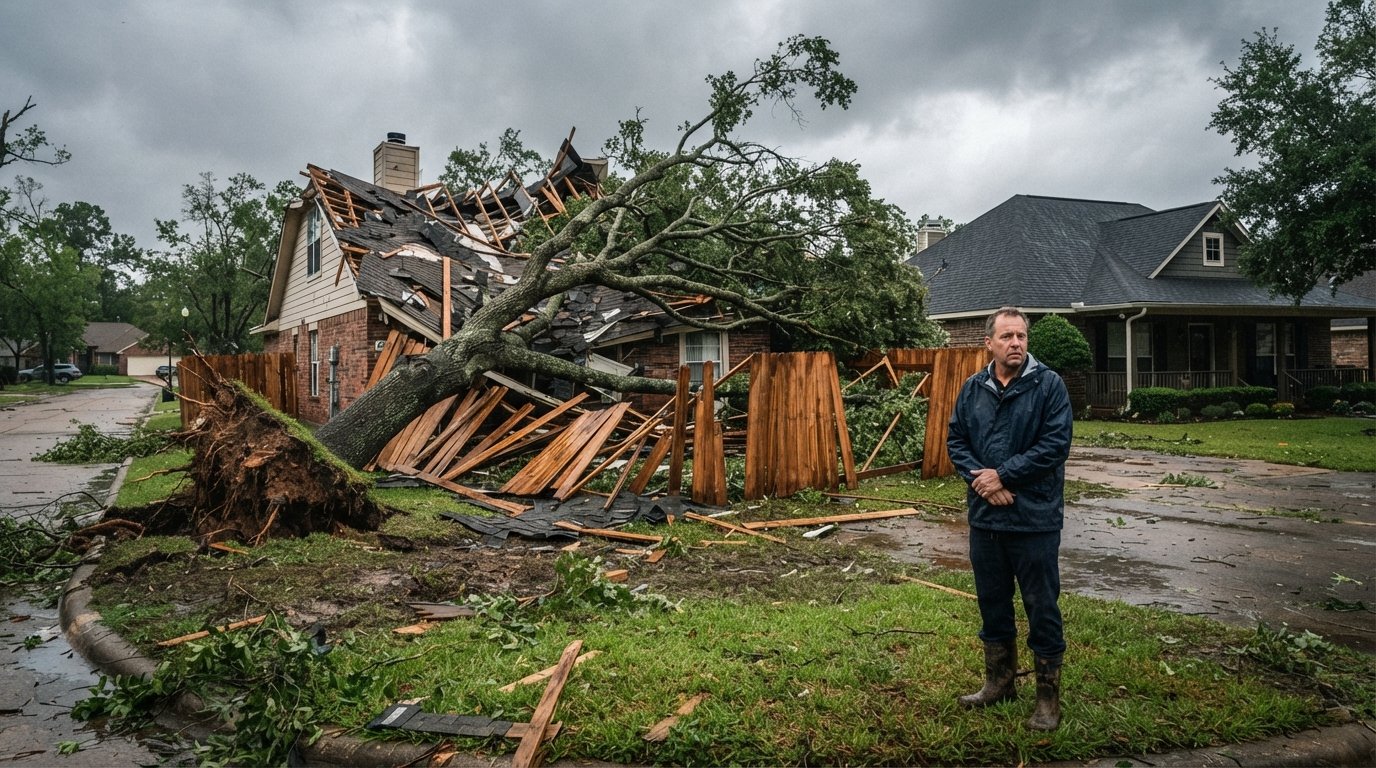
The sound of splintering wood during a storm is alarming enough. But when you look outside and see that your oak has crashed onto your neighbor's roof, the panic shifts from property damage to a single, urgent question: who pays for this? The answer is rarely as straightforward as pointing at the tree's origin. Homeowners insurance when a tree falls on a neighbor's property operates on a fault-based system that hinges on negligence, prior knowledge of the tree's condition, and the specific language of both policies. Understanding these rules before a storm hits can save you from a financial headache and a neighborhood feud.
Most people assume that the owner of the tree is automatically responsible for any damage it causes. That is a common myth. In reality, insurance companies and courts generally follow the principle that a healthy tree falling due to a severe storm is considered an Act of God. In that scenario, the tree owner is usually off the hook, and the neighbor's own homeowners insurance responds to the damage. The dynamic changes entirely if the tree was diseased, dead, or visibly decaying and the owner had been warned about it. That is when liability kicks in.
This guide breaks down the liability versus property damage coverage in tree incidents, explains when the tree owner is responsible versus the neighbor's insurer, and offers practical steps to document your trees and prevent disputes. Whether you are the tree owner or the neighbor with a crushed fence, knowing these rules helps you navigate the claims process with confidence.
Liability Versus Property Damage Coverage in Tree Incidents
When a tree falls, two distinct types of insurance coverage come into play, and confusing them is the root of most disputes. The first is property damage coverage, which is part of the neighbor's own homeowners policy. The second is liability coverage, which belongs to the tree owner's policy. Which one responds depends entirely on why the tree fell.
Your neighbor's homeowners insurance policy typically covers damage to their dwelling, other structures (like fences or sheds), and personal property regardless of who owns the tree. If a storm knocks your healthy pine onto their roof, their insurer will likely pay to repair the roof and remove the tree from the structure. This is because their policy is designed to protect their property from sudden and accidental damage, and the cause of loss (windstorm) is usually covered. The tree owner's policy does not come into play in this scenario because there is no negligence.
Liability coverage, on the other hand, is triggered when the tree owner is legally responsible for the damage. Homeowners insurance liability coverage pays for bodily injury or property damage that the policyholder is legally obligated to pay because of negligence. If your neighbor can prove that you knew the tree was dead or diseased and failed to take action, your liability coverage could respond to their claim. This would cover the cost to repair their property, and it would also provide a legal defense if they sue you.
To illustrate, imagine two scenarios. In the first, a violent thunderstorm with 70 mph winds topples a healthy maple onto your neighbor's car. The neighbor files a claim with their own auto or homeowners insurance, and your policy is not involved. In the second scenario, your neighbor had sent you three certified letters over the past year warning that your tree was hollow and leaning toward their driveway. You ignored them. A moderate storm brings the tree down on their car. Here, your liability coverage would likely be responsible because you were negligent in maintaining a known hazard. The distinction is critical: without proof of negligence, the tree owner's insurance rarely pays for the neighbor's damage.
When the Tree Owner Is Responsible Versus the Neighbor's Own Insurer
The dividing line between responsibility is negligence. Insurance companies and courts ask a simple question: did the tree owner know, or should they have known, that the tree posed a hazard? If the answer is no, the neighbor's own insurer handles the claim. If the answer is yes, the tree owner's liability coverage may be on the hook.
Proving negligence requires evidence. A neighbor cannot simply claim the tree was dead after the fact. They need documentation, such as photos of the tree before the storm, arborist reports, or written warnings they sent to the owner. This is why disputes often arise: the evidence is either missing or ambiguous. In many states, a tree owner is only liable if they had actual or constructive notice of the defect. Constructive notice means a reasonable person should have noticed the problem, such as a large mushroom growing at the base of the trunk or visible rot. But without documentation, it becomes a he-said-she-said situation that insurers are reluctant to litigate.
Even when negligence is clear, the tree owner's liability coverage has limits. Most standard homeowners policies offer liability limits of $100,000 to $300,000, which is usually enough for a fence or a car but may be insufficient for a house. If the damage exceeds the limit, the tree owner could be personally responsible for the excess. This is why umbrella policies are valuable for homeowners with large trees near property lines.
It is also important to understand that the neighbor's own insurer may attempt to subrogate against the tree owner's policy if they believe negligence exists. Subrogation is the process where the neighbor's insurer pays the claim and then seeks reimbursement from the at-fault party. If the tree owner's insurer disputes the claim, the two companies may negotiate or go to arbitration. For the policyholders involved, this process usually happens in the background, but it can prolong the resolution.
For homeowners who want to understand the baseline requirements for coverage, our guide on when home insurance is required explains the key factors that influence mandatory coverage and how liability fits into the bigger picture.
How to Document the Tree's Condition Before a Storm
Prevention and documentation are your best defenses against a liability claim. If you own large trees, especially those near property lines, you should proactively document their health. This does not mean you need a professional arborist report every year, but you should have a system for recording maintenance and inspections.
Start by taking dated photos of your trees from multiple angles. Include close-ups of the trunk, major limbs, and the canopy. If you have a tree that leans or has a visible defect, photograph it and note any changes over time. Keep records of any pruning or maintenance you have done, including receipts from tree services. These records can demonstrate that you were a responsible owner who took reasonable care.
If a neighbor expresses concern about a tree, take it seriously. Document their concern and your response. If they claim the tree is dangerous, consider hiring a certified arborist to evaluate it. An arborist can provide a written report stating whether the tree is healthy or hazardous. If the tree is healthy, the report protects you. If it is hazardous, you can take action to remove or treat it, which also protects you from future liability. Ignoring a neighbor's warning is the fastest way to establish negligence.
Here are practical steps to document your trees and reduce risk:
- Conduct an annual visual inspection of all large trees, looking for dead branches, cavities, cracks, or fungal growth.
- Keep a file with dated photos, arborist reports, and receipts for any tree work.
- Respond in writing to any neighbor concerns, and document the steps you took to address them.
- After any severe storm, inspect your trees for new damage and document it immediately.
These records are invaluable if a claim arises. They shift the narrative from "I didn't know" to "I acted reasonably," which is exactly what your insurer needs to defend you.
Filing a Claim and What Adjusters Review
When a tree falls on a neighbor's property, the claims process can involve one or both insurers. The first step is for the neighbor to file a claim with their own homeowners insurance, regardless of who owns the tree. Their insurer will send an adjuster to assess the damage and determine coverage. The adjuster will review the cause of loss, the extent of damage, and whether the tree owner's negligence contributed.
If the neighbor's insurer believes the tree owner is liable, they may contact the tree owner's insurer to seek reimbursement. At that point, the tree owner's adjuster will investigate. They will look for evidence of negligence: prior complaints, photos of the tree's condition, maintenance records, and any professional assessments. They will also review the policy to confirm liability coverage limits and exclusions.
Adjusters typically review the following when a tree claim is filed:
- Cause of loss: Was it a storm, or did the tree fall due to neglect?
- Tree health: Was the tree dead, diseased, or structurally compromised before the fall?
- Notice: Did the tree owner have actual or constructive notice of the hazard?
- Documentation: Are there photos, arborist reports, or written warnings?
- Coverage limits: Does the tree owner's liability limit cover the damage?
For the tree owner, the best approach is to cooperate with your insurer and provide any documentation you have. Do not admit fault or make promises to pay for repairs. Let the insurers handle the determination of liability. If you are the neighbor, keep all receipts and photos of the damage, and be prepared to provide a statement. The process can take weeks or months, especially if subrogation is involved.
It is also wise to understand your policy's coverage for tree removal. Most homeowners policies cover tree removal only if the tree hits a covered structure, like a house or fence. Removal of a tree that simply falls in the yard is often not covered or has a low sublimit (e.g., $500 to $1,000). Check your policy or speak with your agent to understand these limits.
Preventive Steps That Reduce Future Disputes
The best way to avoid a tree-related dispute is to prevent the problem before it happens. Regular maintenance and open communication with neighbors can go a long way. Start by assessing the trees on your property. Are any of them dead, dying, or leaning? Do they have large dead branches that could fall? If so, hire a certified arborist to evaluate them and recommend action.
Pruning is essential. Removing dead wood and thinning the canopy reduces wind resistance and the likelihood of failure. It also improves the tree's health. If a tree is beyond saving, remove it. The cost of removal is far less than the potential liability for damage. And if a neighbor has expressed concern, address it promptly. A polite conversation and a shared arborist evaluation can resolve the issue before it escalates.
For those who want to compare home insurance options and ensure their liability coverage is adequate, resources like InsuranceAdvisers offer educational guides and comparison tools. However, always verify the specifics of your own policy with a licensed agent.
Finally, review your homeowners policy annually. Make sure your liability limits are sufficient for the value of neighboring properties and the risks on your land. Consider an umbrella policy if you have significant assets to protect. And document everything: photos, receipts, and correspondence. A well-documented homeowner is a well-protected homeowner.
Tree falls are unpredictable, but the insurance principles are not. By understanding the difference between liability and property damage coverage, documenting your trees, and maintaining them responsibly, you can protect yourself and your neighbor from financial harm. When in doubt, consult your insurer and keep the lines of communication open. That is the surest way to keep a storm from becoming a legal battle.