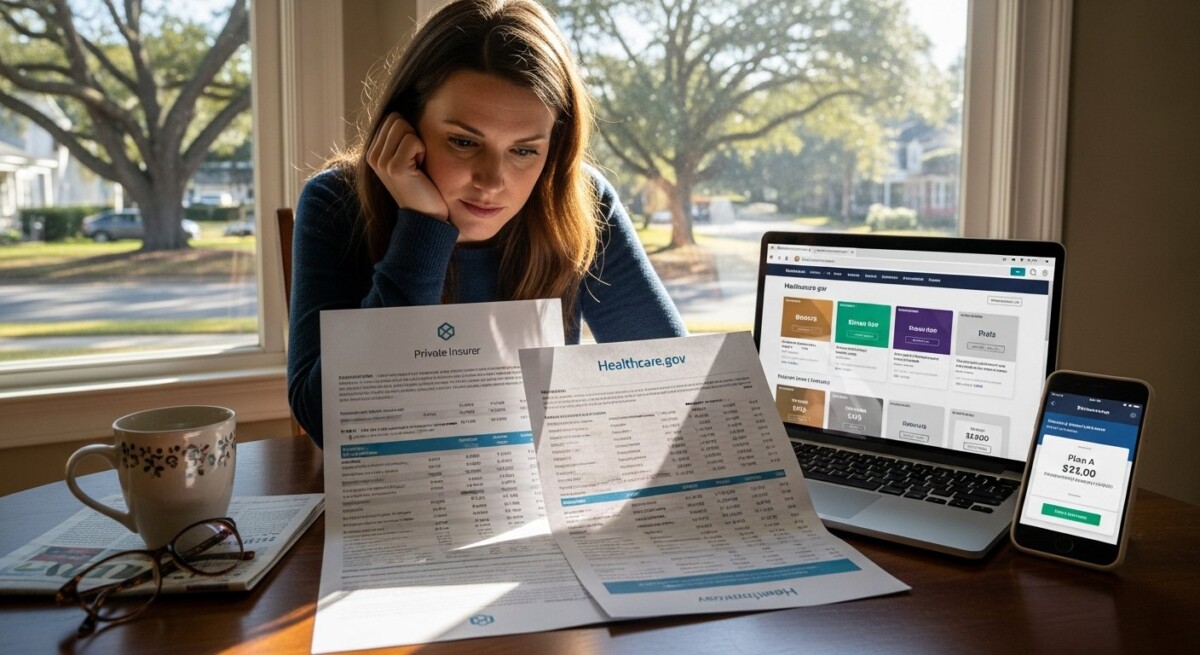
How to Compare Health Insurance Quotes South Carolina
Finding the right health insurance in South Carolina can feel overwhelming, especially when you are balancing monthly premiums against out-of-pocket costs. Whether you are shopping through the federal marketplace, a private broker, or an employer plan, comparing health insurance quotes is the single most effective way to secure coverage that fits both your health needs and your budget. In this guide, we break down exactly how to evaluate South Carolina health insurance options, what factors affect your rates, and where to find reliable quotes without wasting time.
Understanding the South Carolina Health Insurance Market
South Carolina operates under the federally facilitated marketplace, meaning residents use Healthcare.gov to enroll in qualified health plans during Open Enrollment or a Special Enrollment Period. The state also has a handful of private insurers offering individual and family plans outside the marketplace. Because premiums vary by county, age, and coverage level, getting multiple health insurance quotes South Carolina is essential before making a decision.
One of the most important distinctions to understand is the difference between on-exchange and off-exchange plans. On-exchange plans must cover the ten essential health benefits and may qualify for premium tax credits. Off-exchange plans often mirror these benefits but cannot receive subsidies. When you compare free online health insurance quotes, make sure you know which type of plan you are looking at so you do not miss out on financial assistance you may be eligible for.
Key Factors That Influence Your Health Insurance Quotes
Insurance companies in South Carolina consider several variables when pricing a policy. Understanding these factors helps you interpret the quotes you receive and identify opportunities to lower your premium without sacrificing necessary coverage.
- Age: Older applicants pay higher premiums, but the rating ratio is capped at 3:1 for adults under the Affordable Care Act.
- Location: Premiums vary by rating area within South Carolina. Urban areas like Charleston or Greenville may have different rates than rural counties.
- Tobacco use: Insurers can surcharge tobacco users up to 50 percent in most states, including South Carolina.
- Plan metal tier: Bronze plans have lower premiums but higher deductibles, while Platinum plans have higher premiums and lower out-of-pocket costs.
- Household income: If your income is between 100% and 400% of the federal poverty level, you may qualify for premium tax credits that reduce your monthly cost.
Each of these factors interacts with the others. For example, a 45-year-old non-smoker living in Richland County will see a very different set of health insurance quotes South Carolina than a 25-year-old smoker in Horry County. That is why personalized comparison is critical rather than relying on average premiums published online.
Where to Get Health Insurance Quotes South Carolina
You have several reliable avenues for obtaining quotes, each with its own advantages. The most direct route is the federal marketplace at Healthcare.gov, where you can view all available on-exchange plans side by side. Private comparison websites, including InsuranceShopping.com, allow you to see both on-exchange and off-exchange options in one place, saving you from visiting multiple sites.
Another option is working with a licensed health insurance agent or broker who specializes in South Carolina plans. Brokers can often access exclusive off-exchange products and help you navigate the nuances of network types, such as HMOs versus PPOs. In our guide on how to compare free online health insurance quotes, we explain the exact steps to verify that a quote includes all the benefits you need.
If you are looking for coverage from a specific insurer, you can also visit the carrier’s website directly. For instance, if Aetna offers plans in your county, you can request a quote on their site. To see how different carriers stack up, check out our detailed breakdown of compare Aetna health insurance quotes for 2026.
How to Compare Plans Effectively
Once you have a handful of quotes, the real work begins. Do not simply sort by monthly premium. A plan with a lower premium often comes with a higher deductible, higher copays, and a narrower network. Instead, use a structured comparison method that accounts for your total expected spending.
Start by estimating your annual medical usage. If you are generally healthy and only need preventive care and one or two doctor visits per year, a Bronze or High-Deductible Health Plan (HDHP) may be cost-effective. If you have a chronic condition, take regular prescriptions, or anticipate surgery, a Gold or Platinum plan could save you money in the long run despite the higher monthly cost.
Next, compare the out-of-pocket maximums. This is the most you would pay in a worst-case scenario. South Carolina plans for 2025 have an out-of-pocket limit of $9,200 for an individual and $18,400 for a family. A plan with a lower out-of-pocket maximum provides better financial protection. Finally, check the provider network. A plan is only valuable if your preferred doctors and hospitals are in-network. For a deeper dive into this process, read our guide on how to compare health insurance rates and quotes.
Special Enrollment Periods and Life Events
Open Enrollment for 2025 coverage runs from November 1 to January 15 in South Carolina. However, if you experience a qualifying life event, you can enroll outside that window. Qualifying events include losing other health coverage, moving to a new county, getting married or divorced, having a baby, or changes in household income that affect subsidy eligibility.
When a life event occurs, you typically have 60 days to enroll in a new plan. During this time, you should quickly gather health insurance quotes South Carolina to compare your options. Missing this window means waiting until the next Open Enrollment period unless you qualify for Medicaid or another exception.
If you are comparing plans for your entire family, keep in mind that each family member may have different needs. A plan that works well for an adult with a chronic condition may not be the best choice for a healthy child. In our article on compare family health insurance plan quotes online, we walk through strategies for balancing coverage across multiple family members.
Common Mistakes When Shopping for Health Insurance
Even experienced shoppers can fall into traps that lead to costly coverage gaps. One frequent mistake is choosing a plan solely based on the monthly premium without checking the deductible or copay structure. Another is assuming that all plans cover the same prescription drugs. Each insurer maintains a formulary, and your medications may not be covered or may be placed in a higher tier with a larger copay.
Some consumers also overlook network restrictions. A PPO plan offers more flexibility to see specialists without a referral, but it usually costs more. An HMO plan is cheaper but requires you to stay within a specific network and get referrals for specialist care. Before you finalize any quote, verify that your primary care doctor and any specialists you see are in-network for the plan you are considering.
Finally, do not forget to check the plan’s summary of benefits and coverage (SBC). This standardized document makes it easier to compare deductibles, copays, coinsurance, and out-of-pocket limits across different plans. Using the SBC alongside your quotes gives you a complete picture of what each plan actually costs.
Frequently Asked Questions
Can I get health insurance quotes South Carolina without providing personal information?
Yes, many comparison tools allow you to enter your zip code, age, and household size to see sample rates without a full application. However, for accurate quotes that reflect your actual premium, you will eventually need to provide more details such as income and tobacco use.
Does South Carolina have its own state-based marketplace?
No, South Carolina uses the federally facilitated marketplace at Healthcare.gov. Some private insurers also sell off-exchange plans directly or through brokers.
Are short-term health insurance plans available in South Carolina?
Yes, short-term limited-duration plans are sold in South Carolina. They are cheaper but do not cover pre-existing conditions or the ten essential health benefits. They are best used as temporary gap coverage.
How can I lower my health insurance premium in South Carolina?
You can lower your premium by choosing a higher deductible plan, using tobacco cessation programs to qualify for non-tobacco rates, and ensuring you apply for any premium tax credits you are eligible for based on your income.
What is the penalty for not having health insurance in South Carolina?
South Carolina does not impose a state-level penalty for being uninsured. The federal individual mandate penalty was eliminated in 2019, so there is no tax penalty for going without coverage.
If you have additional questions or want personalized assistance comparing plans, our team is available to help. Call us at (833) 877-9927 for expert guidance tailored to your situation.
Share This Story, Choose Your Platform!
About the Author: Everett Hale