
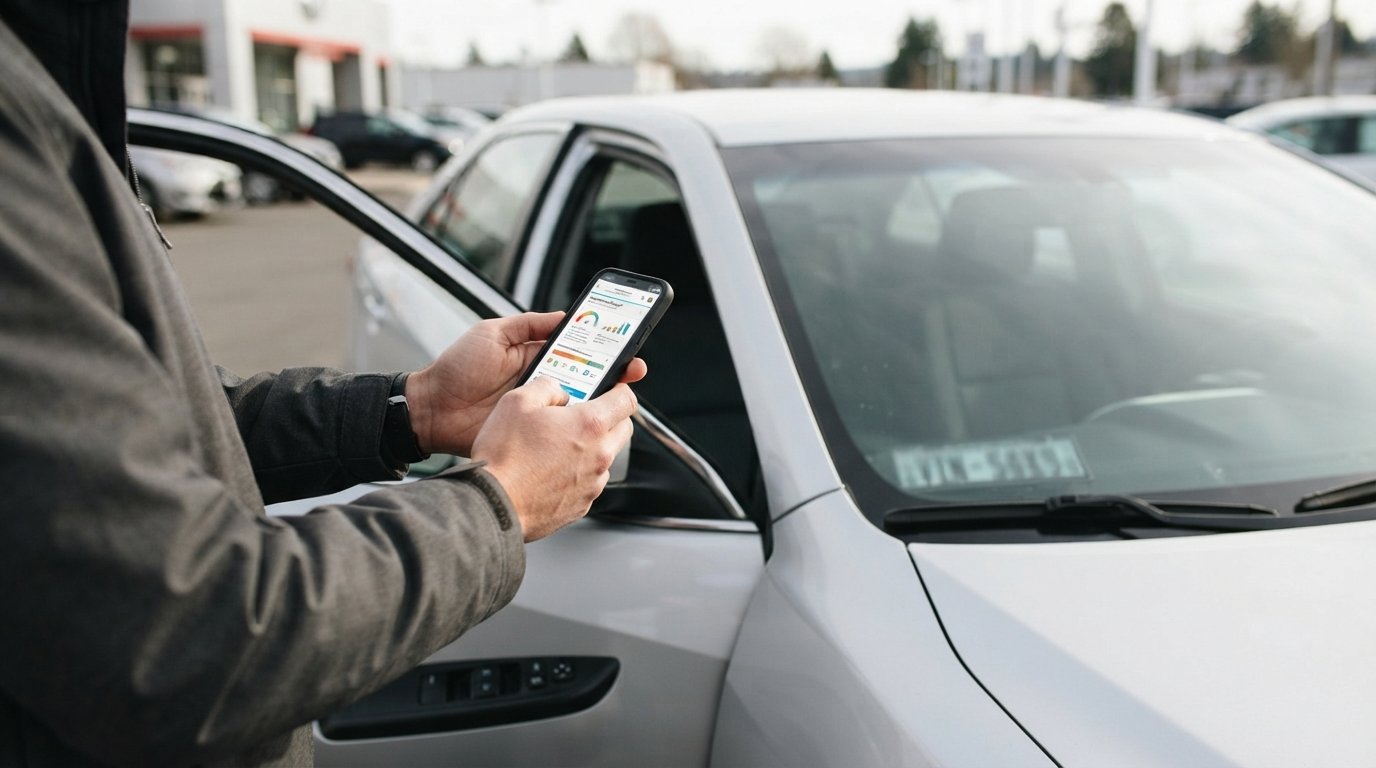
How to Use a VIN to Check a Used Car Before Insurance
Verify a used car's history with a VIN check before buying insurance to avoid surprise premiums. Call us at (833)-214-6397 for expert guidance.

By Tamsin Rowe
You found a used car that looks great, drives well, and fits your budget. But before you hand over cash or sign a loan, there is one step that too many buyers skip: using the Vehicle Identification Number (VIN) to verify the car's history and specs. This 17-character code is the key to unlocking vital information that directly affects your auto insurance rates and even whether an insurer will cover the vehicle at all. In this guide, you will learn how to use a VIN number to check a used car before buying insurance, so you can avoid costly surprises and secure the right coverage with confidence.
What a VIN Reveals About a Used Car
The VIN is not just a random string of letters and numbers. It encodes the vehicle's manufacturer, model year, assembly plant, and serial number. More importantly, a VIN lookup can expose hidden details that sellers may not disclose, such as a salvage title, previous accidents, odometer rollback, or flood damage. These factors can dramatically change how an insurer views the risk of insuring that car.
For example, a vehicle with a rebuilt title may be difficult or impossible to insure with standard carriers. Some insurers will only offer liability coverage, while others may decline altogether. Even if coverage is available, the premium could be significantly higher. Knowing this before you buy gives you bargaining power and helps you avoid a situation where you own a car you cannot afford to insure.
Beyond history, the VIN also confirms the exact trim level, engine type, and safety features. These details matter because insurers use them to calculate premiums. A car with advanced safety features like automatic emergency braking, lane departure warning, or adaptive cruise control may qualify for discounts. Conversely, a high-performance engine or a trim level that is popular with thieves could raise your rate. Verifying the VIN ensures you are quoted for the correct configuration, not a base model that happens to look similar.
Free and Paid VIN Lookup Tools
Fortunately, there are many ways to run a VIN check, ranging from free basic decoders to comprehensive paid reports. The right choice depends on how much detail you need and your budget. Start with free options to get a quick overview, then consider a paid report if you are serious about a particular vehicle.
Free VIN decoders, such as those offered by the National Highway Traffic Safety Administration (NHTSA) or various commercial websites, provide basic information like make, model, year, and country of assembly. Some also flag open safety recalls. These tools are useful for verifying that the seller's description matches the actual vehicle and for catching obvious discrepancies. However, they typically do not include accident history, title branding, or service records.
For a deeper dive, paid services like Carfax or AutoCheck offer comprehensive reports that include accident history, salvage records, odometer readings, and even service and inspection records from participating shops. These reports can cost anywhere from $20 to $40 per vehicle, but they are well worth the investment when you are spending thousands on a used car. Many dealers provide these reports for free, so always ask. If not, purchasing one yourself is a smart move.
When using any VIN lookup tool, make sure you are entering the VIN correctly. A single typo can return information for a different vehicle or no results at all. Double-check the 17 characters against the car's dashboard, door jamb, and title. Also, be aware that some free tools may try to upsell you or collect personal information, so read the fine print before submitting your data.
Why Insurers Ask for the VIN at Quote Time
When you request an auto insurance quote, the insurer will almost always ask for the VIN. This is not just a formality. The VIN allows the insurer to pull up the vehicle's exact specifications, safety ratings, and claims history. It helps them assess risk accurately and determine the appropriate premium. If you provide the wrong VIN, the quote you receive may be inaccurate, and you could face a higher premium or even a denied claim later on.
For instance, if you quote a base model but actually buy the sport trim with a larger engine, the insurer may have underwritten the policy based on incorrect information. When you file a claim, they could adjust your rate retroactively or, in extreme cases, void the policy for misrepresentation. Similarly, if the VIN reveals a salvage title that you were unaware of, the insurer may refuse to offer comprehensive or collision coverage, leaving you financially exposed.
Providing the VIN also speeds up the quoting process. Insurers can use it to automatically decode the vehicle's features and verify eligibility for discounts. Some insurers offer telematics programs or safe driver discounts that require specific vehicle compatibility, and the VIN helps confirm that. In short, the VIN is the backbone of an accurate auto insurance quote, and using it correctly is a key part of how to use a VIN number to check a used car before buying insurance.
Salvage, Rebuilt, and Branded Titles: Coverage Complications
One of the most critical pieces of information a VIN check can reveal is a branded title. Titles can be branded as salvage, rebuilt, flood, lemon, or junk, depending on the state and the circumstances. These brands indicate that the vehicle has been severely damaged or deemed a total loss by an insurer at some point. Buying a car with a branded title can be risky, and insuring it can be even trickier.
Salvage titles mean the car was declared a total loss, often after a major accident, flood, or theft recovery. Rebuilt titles indicate that the vehicle was salvaged but has been repaired and inspected to meet state requirements for roadworthiness. While a rebuilt title may allow you to register and drive the car, many insurers will only offer liability coverage, not comprehensive or collision. Some may refuse to insure it altogether. This means if you finance the car, the lender may require full coverage, which could be impossible to obtain.
Flood-damaged cars are particularly problematic because water damage can cause electrical and mechanical issues that may not surface immediately. Insurers are wary of these vehicles and may charge higher premiums or decline coverage. Lemon titles, while rare, indicate that the manufacturer bought back the car under lemon laws, often due to persistent defects. These vehicles may also be difficult to insure.
Before you buy any used car, run a VIN check to see if the title is branded. If it is, factor in the potential insurance challenges and consider whether the savings are worth the risk. In many cases, it is better to walk away and find a clean-title vehicle. If you do proceed, get insurance quotes first to understand what coverage is available and at what cost.
Checklist to Run Before You Request a Quote
Now that you understand the importance of the VIN, here is a step-by-step checklist to follow before you request a no-obligation quote. This process will help you verify the vehicle's history, confirm its specs, and ensure you get accurate insurance pricing.
- Locate and verify the VIN. Find the VIN on the dashboard near the windshield, on the driver's side door jamb, and on the vehicle title. Ensure all three match and that there are no signs of tampering.
- Run a free VIN decoder. Use a free tool like the NHTSA VIN decoder to confirm the make, model, year, and trim. Check for open safety recalls and verify that the vehicle matches the seller's description.
- Purchase a comprehensive vehicle history report. Invest in a report from a reputable provider like Carfax or AutoCheck. Look for accident history, title brands, odometer readings, and service records. Pay special attention to any salvage or rebuilt title notations.
- Check for liens and theft records. Some VIN reports include lien information or theft records. If the car has an outstanding lien, the lender could repossess it even after you buy it. A theft record could indicate a stolen vehicle.
- Confirm the trim and safety features. Use the VIN to verify the exact trim level and optional equipment. This ensures you are quoted correctly and can identify any safety features that may qualify for discounts.
- Get insurance quotes with the VIN. Once you have verified the vehicle, provide the VIN to insurers when requesting quotes. This guarantees accurate pricing and reveals any coverage limitations, especially if the title is branded.
Following this checklist not only helps you avoid buying a problematic vehicle but also streamlines the insurance shopping process. You will have all the information you need to compare quotes confidently and choose the right coverage for your needs.
How to Use a VIN Number to Check a Used Car Before Buying Insurance: A Step-by-Step Example
Let us walk through a practical example to illustrate how to use a VIN number to check a used car before buying insurance. Imagine you are considering a 2019 Honda Accord from a private seller. The seller claims it has a clean title and no accidents, but you want to be sure.
First, you locate the VIN on the dashboard and door jamb. You notice that the VIN on the dashboard matches the one on the title, but the door jamb sticker looks slightly worn. You run a free VIN decoder and confirm it is a 2019 Accord EX-L with a 1.5L engine. So far, so good. Next, you purchase a vehicle history report. The report reveals that the car was involved in a minor accident two years ago, but it was repaired and the title remains clean. However, it also shows that the car was previously registered in a state known for flood damage, though no flood title brand appears.
Armed with this information, you decide to get insurance quotes. You provide the VIN to several insurers. One insurer offers a competitive rate but notes that because of the accident history, they will apply a surcharge. Another insurer offers a slightly higher rate but does not surcharge for the accident. You also confirm that the car's safety features (forward collision warning, lane keeping assist) qualify for a discount. With this knowledge, you can negotiate with the seller or choose the insurer that best fits your needs.
This example shows how a VIN check can uncover details that affect both your purchase decision and your insurance costs. Without it, you might have overpaid for the car or been surprised by a higher premium.
Common Mistakes to Avoid
Even with the best intentions, buyers often make mistakes when checking a VIN. One common error is transposing characters or misreading similar-looking ones (like O and 0, or I and 1). Always double-check the VIN against multiple sources on the vehicle. Another mistake is relying solely on a free VIN decoder. While useful, free tools often lack critical history information like title brands and accident records. Always supplement with a paid report if you are serious about the car.
Another pitfall is ignoring the VIN when getting insurance quotes. Some buyers provide the make and model only, thinking it is enough. But as we have seen, the VIN is essential for accurate pricing and coverage eligibility. Skipping this step can lead to incorrect quotes, unexpected premium increases, or even claim denials. Finally, do not assume that a clean VIN report guarantees a perfect car. It is a valuable tool, but it should be combined with a physical inspection by a trusted mechanic.
Resources for Insurance Shopping
Once you have verified the VIN and are ready to insure your used car, you need a reliable way to compare quotes. InsuranceShopping.com is a comprehensive online resource that connects consumers with licensed insurance agents and carriers. The site offers expert guides, educational content, and comparison tools to help you make informed decisions about auto, home, health, life, and Medicare insurance. You can request no-obligation quotes and explore coverage options tailored to your needs. For those also considering health coverage, our guide on affordable health insurance for military spouses provides valuable insights.
Additionally, for a broader comparison of insurance products and providers, you can visit QuoteComparison, which offers tools and resources to help you shop for policies. Remember, InsuranceShopping.com is an informational and connection service, not an insurer, and does not guarantee rates or eligibility. Always verify details with licensed professionals.
Using a VIN to check a used car before buying insurance is a simple yet powerful step that can save you money and headaches. By verifying the vehicle's history, specs, and title status, you can negotiate with confidence, avoid problematic vehicles, and secure the right coverage at the best possible rate. Make it a habit to run a VIN check on every used car you consider, and you will be well on your way to a smarter purchase.