
Vehicle Safety Features That May Lower Car Insurance Premiums
Vehicle safety features that may lower car insurance premiums can cut your costs. Call (833)-214-6397 to compare quotes and find the right coverage.

By Elowen Hartley
You have probably seen the commercials: a new car stops itself before a collision, warns you when you drift out of your lane, or sees around a dark corner with headlights that pivot as you steer. Beyond the obvious safety appeal, these technologies can have a real effect on what you pay for auto insurance. Understanding which vehicle safety features that may lower car insurance premiums actually count, how to prove you have them, and where the savings can evaporate is the difference between a discount you assume you are getting and one that shows up on your policy. This guide walks through the features insurers recognize, the paperwork that unlocks the credit, and the cost trade-offs that can quietly offset your savings. For a broader view of how insurers evaluate risk and pricing, resources such as InsuranceAdvisers can help you compare coverage options with more context before you buy.
Why Insurers Pay Attention to Safety Technology
Auto insurance pricing is built on risk. When an insurer calculates your premium, it estimates how likely you are to file a claim and how expensive that claim might be. Vehicle safety features influence both sides of that equation. A car that automatically brakes in low-speed traffic may avoid the fender benders that generate frequent collision claims. A vehicle with lane-keeping assistance may be less likely to drift into another lane at highway speed, reducing the severity of a crash. When these systems work as designed, the insurer's expected payout drops, and some of that benefit can be passed back to you in the form of a discount.
That said, discounts are not automatic and they are not uniform. Each insurer decides which features it credits, how much of a reduction it offers, and what proof it requires. Some carriers advertise generous safety equipment discounts, while others fold the benefit into a general "new car" or "advanced technology" credit. The only reliable way to know what you qualify for is to ask your insurer directly or compare quotes from multiple carriers that recognize the equipment on your vehicle.
There is also a timing issue. Safety features usually matter most when you are shopping for a new policy or renewing an existing one. If you add an aftermarket system later, you typically need to notify your insurer and provide documentation before any discount appears. Waiting until your next renewal can mean months of paying the higher rate you were trying to avoid.
Which Safety Features Commonly Earn a Discount
Not every piece of technology on your dashboard carries the same weight with insurers. The features that tend to earn recognition are the ones with a clear, measurable effect on claim frequency or claim severity. These are the systems insurers most often ask about when you request a quote.
- Automatic emergency braking (AEB): This system detects an impending collision and applies the brakes if the driver does not respond in time. Because it addresses the most common crash type, rear-end collisions, many insurers treat it as a high-value safety credit.
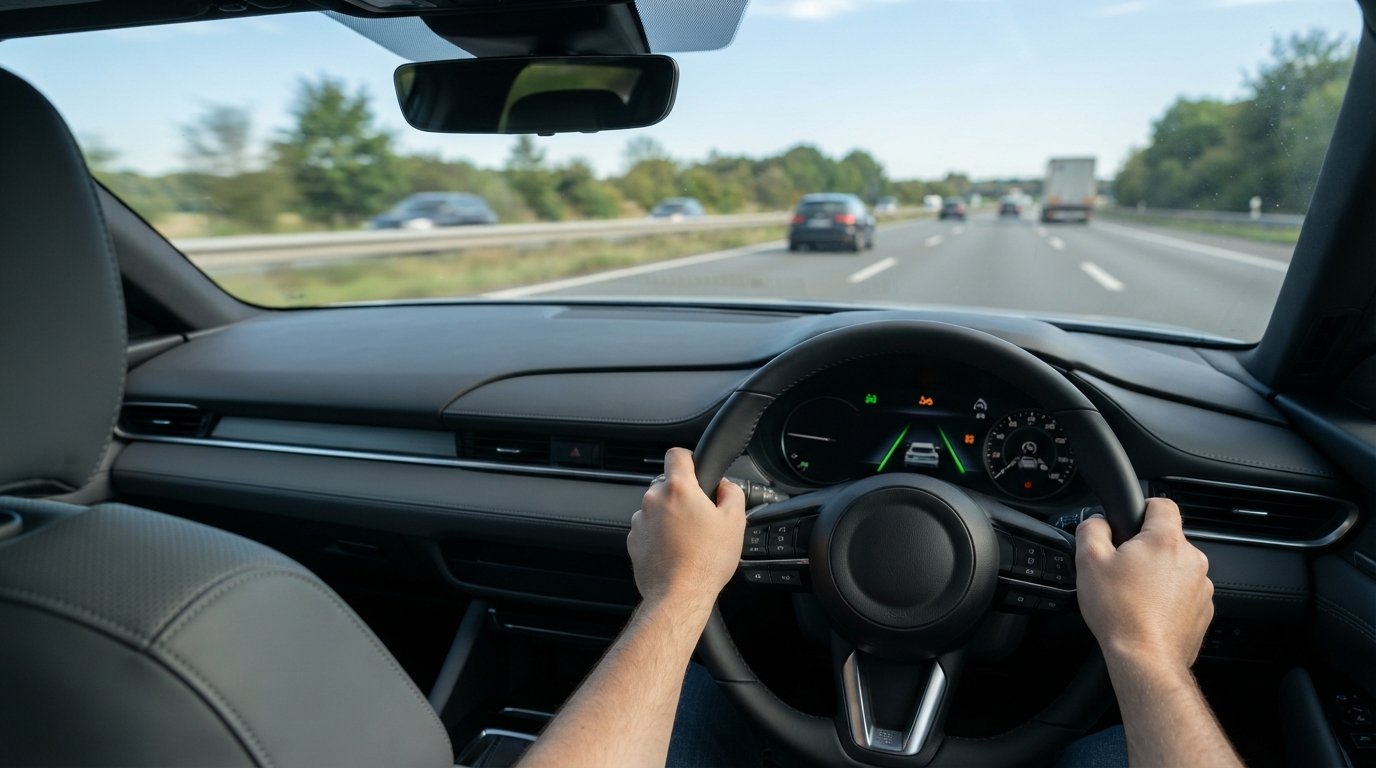
- Lane departure warning and lane-keeping assist: These features alert you when you drift out of your lane and, in some vehicles, gently steer you back. They are especially relevant for highway driving, where a momentary lapse can lead to a serious accident.
- Adaptive headlights: Headlights that pivot with your steering or adjust their beam pattern to avoid blinding oncoming drivers can improve nighttime visibility. Night driving is disproportionately represented in fatal crashes, so insurers sometimes reward this feature.
- Forward collision warning: Often paired with AEB, this system alerts the driver to an obstacle ahead. Even without automatic braking, the warning alone can reduce reaction time and crash severity.
- Blind spot monitoring: Sensors that detect vehicles in adjacent lanes can reduce lane-change collisions, which are common in heavy traffic.
The exact list varies by carrier. Some insurers publish a specific menu of qualifying features and discount percentages; others use a more general "advanced safety technology" category. When you request a quote, it helps to have your vehicle identification number (VIN) ready, because many insurers can decode factory-installed safety equipment directly from the VIN. If you added equipment after purchase, you will usually need to provide receipts or installation documentation.
Anti-Theft Devices and Comprehensive Coverage
Safety features that prevent crashes are only part of the picture. Anti-theft devices address a different risk: the possibility that your vehicle will be stolen or broken into. Comprehensive coverage, which is the portion of your policy that pays for theft, vandalism, fire, and similar non-collision losses, is where anti-theft discounts usually appear.
Common anti-theft features that insurers recognize include factory-installed alarm systems, engine immobilizers, vehicle tracking systems, and steering wheel locks. Some carriers offer a discount for any one of these; others require a combination or a professionally installed system. The discount is often smaller than what you might see for crash-avoidance technology, but it can still shave a few percentage points off your comprehensive premium.
It is worth noting that anti-theft discounts are more common in areas with higher theft rates. If you live in a region where vehicle theft is rare, your insurer may not offer a specific credit even if your car has an alarm. In that case, the value of the feature is still real, but it may not translate into a line-item discount on your policy. Asking your agent whether a theft-prevention credit exists in your state is a quick way to find out.
How to Submit Proof of Your Safety Equipment
Knowing you have a qualifying feature is not the same as getting credit for it. Insurers need documentation before they can adjust your premium. The process is usually straightforward, but it requires a few specific steps.
- Check your window sticker or build sheet: The original window sticker lists factory-installed options, including safety packages. If you no longer have it, a dealership can often print a build sheet from your VIN.
- Contact your insurer before you buy or renew: Tell the agent which features your vehicle has and ask whether the carrier offers a discount for them. Get the answer in writing if possible.
- Provide the VIN: Many insurers can verify factory equipment automatically using the VIN. This is the fastest path to a discount for built-in systems.
- Submit receipts for aftermarket installations: If you added a system after purchase, send the invoice or installation certificate. Some insurers also accept a photo of the installed device.
- Confirm the discount appears on your policy: After you submit proof, review your next billing statement or declaration page to make sure the credit was applied. If it is missing, follow up promptly.
Timing matters here. If you are shopping for a new policy, mention the safety features during the quote process so the discount is built into the initial price. If you already have a policy, you can usually add the discount mid-term, but it may not take effect until your next renewal depending on the insurer's rules. Either way, do not assume the credit is automatic just because the feature is listed on your vehicle.
Why Repair Costs Can Offset Your Savings
There is a catch that many drivers discover only after a minor accident. The same sensors and cameras that earn you a safety discount can be expensive to repair or recalibrate. A small bump to the front bumper might damage a radar unit, a camera, or a lidar sensor, and replacing or recalibrating those components can cost far more than repairing a conventional bumper.
Insurers are aware of this trade-off. That is one reason safety feature discounts tend to be modest rather than dramatic. The discount reflects the reduced likelihood of a claim, but the insurer also prices in the higher cost of repairing a technologically complex vehicle. In some cases, the net effect on your premium is smaller than the advertised discount percentage suggests.
This does not mean safety features are a bad deal. They can prevent injuries and reduce the severity of crashes, which is valuable regardless of the premium impact. But it does mean you should think about the total cost of ownership, not just the discount. If you are comparing two vehicles, one with advanced driver assistance systems and one without, ask your insurer for quotes on both. The difference in premium may be smaller than you expect, and the repair costs after a claim may be larger.
For a closer look at how premiums are calculated and how they can change over time, including for older drivers, see this guide to revised health insurance premiums for seniors. While that article focuses on health coverage, the underlying principle is similar: pricing reflects both the risk being insured and the cost of paying claims.
Other Factors That Influence Whether You See Savings
Safety features do not operate in a vacuum. Your premium is shaped by a long list of variables, and the presence of automatic braking or lane assist is only one input. Understanding the bigger picture helps you set realistic expectations about how much you can save.
Your driving record, the amount of coverage you buy, your deductible, your location, and the make and model of your vehicle all play a role. A driver with a clean record and a high deductible may see a smaller percentage discount from safety features simply because their base rate is already low. A driver with a recent at-fault accident may see a larger relative benefit, but still pay more overall than a driver without one.
State regulations also matter. Some states require insurers to offer discounts for certain safety devices, while others leave it to the market. If you live in a state with mandated discounts, your insurer should apply the credit automatically once you provide proof. If not, you may need to shop around to find a carrier that values the equipment on your vehicle.
Finally, keep in mind that discounts are not the only way safety features can save you money. Avoiding a crash means avoiding a deductible, a claim surcharge, and the time and hassle of repairs. Those indirect savings can be far larger than the premium discount itself, even if they do not show up on your bill.
Practical Steps to Maximize Your Safety Feature Savings
If you want to make sure you are getting credit for every qualifying feature on your vehicle, a little preparation goes a long way. Start by gathering your VIN, your window sticker or build sheet, and any receipts for aftermarket installations. Then contact your insurer and ask specifically which features qualify for discounts and what proof they need.
If your current insurer does not offer a discount for a feature you have, it may be worth comparing quotes from other carriers. Some insurers are more aggressive than others in recognizing advanced safety technology, and a different carrier could offer a better overall rate even if the discount structure is different. Just be sure to compare total premiums, not just the discount amount, because a lower base rate with no discount can still beat a higher rate with a large discount.
Finally, revisit your coverage after any change to your vehicle. If you add a safety feature later, tell your insurer. If you buy a new car, ask about safety discounts during the quote process. Small adjustments like these can add up over time, and they help ensure you are not leaving money on the table.
Vehicle safety features that may lower car insurance premiums are worth asking about, but they are only one piece of a larger puzzle. The best approach is to combine safety technology with a clean driving record, appropriate coverage, and a willingness to compare quotes from multiple insurers. That combination gives you the best chance of paying a fair price for the protection you need.