
Does Homeowners Insurance Cover Burst Pipe Water Damage?
Does homeowners insurance cover water damage from a burst pipe? Usually yes, if the failure is sudden. Call (833)-214-6397 to review your policy options.

By Theo Merrick
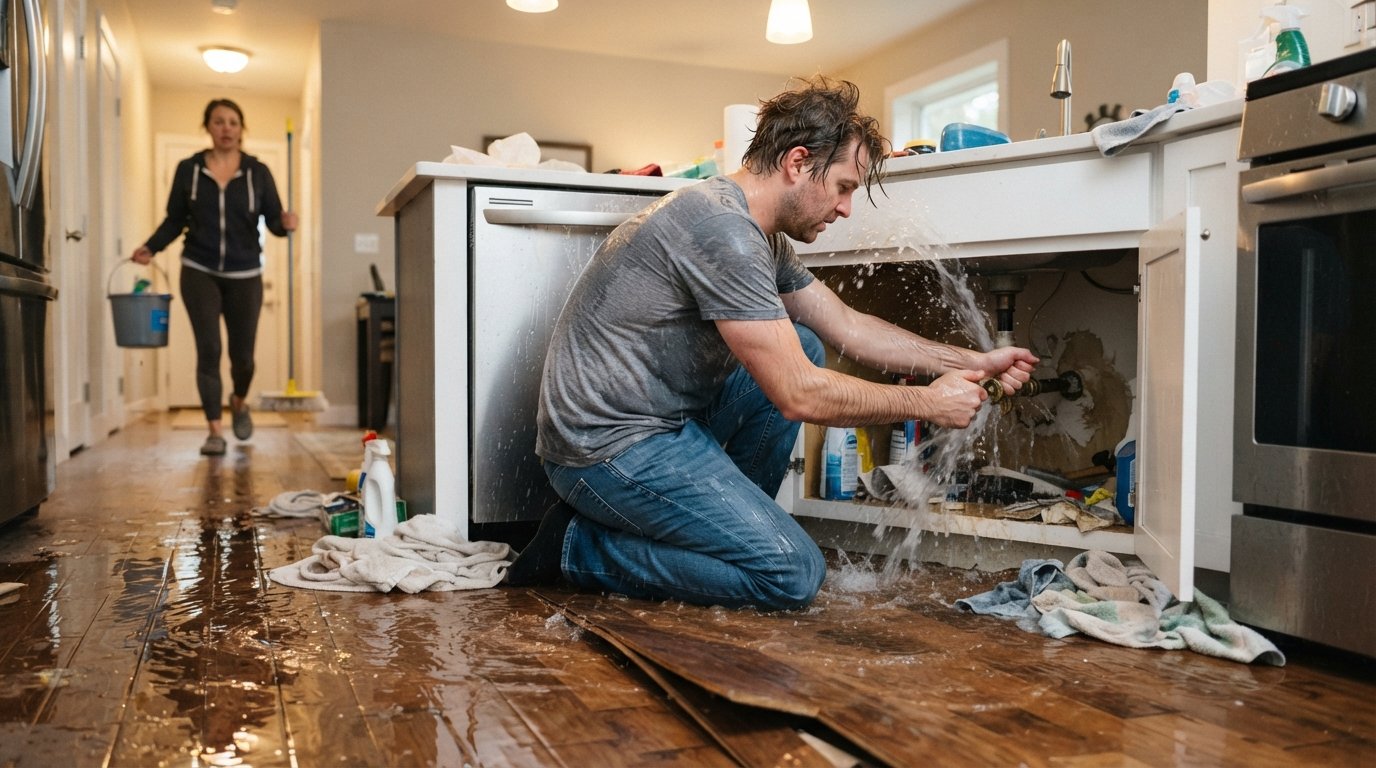
A burst pipe can turn a quiet evening into a frantic scramble: water spraying behind a wall, flooring curling at the edges, and the immediate question of who pays for the mess. The answer to "does homeowners insurance cover water damage from a burst pipe" is usually yes, but with conditions that matter enormously when you file a claim. Standard HO-3 and HO-5 policies typically cover sudden and accidental water damage from a plumbing failure, yet they draw a hard line at gradual leaks, long-term seepage, and certain types of mold. Understanding where that line sits before a pipe fails can mean the difference between a covered claim and a denied one.
This guide breaks down what insurers pay for, what they exclude, and how to protect your claim in the first critical hours after a plumbing emergency. It also explains why the cause of the water matters as much as the water itself, and which endorsements are worth discussing with your agent before the next cold snap arrives.
Sudden Pipe Failure vs. Gradual Leaking: Why Cause Determines Coverage
Homeowners insurance is built around the concept of sudden and accidental damage. A pipe that freezes and bursts overnight, a supply line that snaps behind the washing machine, or a fitting that fails without warning all fit that definition. When the damage is sudden, the resulting water damage is typically covered under the policy's dwelling and personal property provisions. The key is that the failure itself must be unexpected, not the predictable result of neglect or deferred maintenance.
Gradual leaking tells a different story. If a slow drip under the sink has been corroding the cabinet for months, or a pinhole leak in a copper pipe has been staining the ceiling for weeks, insurers generally treat that as a maintenance issue rather than a sudden loss. Most policies exclude damage caused by constant or repeated seepage over a period of time. The reasoning is straightforward: insurance protects against sudden events, not the cumulative wear and tear that every home experiences. That distinction is the single most common reason claims get denied, so it deserves attention before you ever pick up the phone to report a loss.
The practical takeaway is that documentation matters. If you notice a slow leak and fix it promptly, you have a maintenance record. If you ignore it and the pipe finally gives way, the insurer may argue the failure was foreseeable. Keeping receipts for plumbing repairs and noting dates of any work performed can help establish that a subsequent failure was genuinely sudden rather than the end of a long decline.
What Homeowners Insurance Typically Pays For After a Burst Pipe
When a burst pipe claim is approved, the coverage usually extends well beyond the pipe itself. Insurers generally separate the cost of accessing the problem from the cost of repairing the resulting damage, and both categories can add up quickly. The following costs are commonly covered under a standard homeowners policy when the loss is sudden and accidental.
- Water extraction and mitigation: Emergency removal of standing water, drying equipment, and dehumidification to prevent further damage.
- Structural repairs: Drywall, flooring, insulation, cabinetry, and framing damaged by the water.
- Personal property replacement: Furniture, electronics, clothing, and other belongings damaged by the water, subject to policy limits.
- Temporary repairs: Reasonable costs to protect the home from further damage, such as boarding up or shutting off the water supply.
- Additional living expenses: If the home is uninhabitable during repairs, many policies cover hotel bills and extra food costs.
Notice what is not on that list: the pipe itself. Most homeowners policies exclude the cost of repairing the broken pipe or any other plumbing component that failed. The reasoning is that the pipe is part of the home's maintenance system, and insurers expect homeowners to keep those systems in working order. The damage the water caused is covered, but the failed component that caused the damage is not. That distinction surprises many policyholders, so it is worth confirming with your carrier when you review your coverage.
Coverage limits also apply to personal property and to certain categories like jewelry or electronics. If a burst pipe destroys a home office setup or a collection of instruments, the payout may be capped by sublimits in the policy. Reviewing those limits before a loss occurs is far easier than discovering them during a claim.
Why Mold and Ground Water Damage Are Often Excluded
Mold is one of the most contested areas in water damage claims, and the reason is timing. Insurers generally cover mold that results directly from a sudden, covered event, such as a burst pipe that is discovered and dried within a few days. But mold that develops because moisture was left unchecked for weeks or months is typically excluded. Many policies also impose a separate mold coverage limit, often in the range of $10,000, even when the mold is tied to a covered loss. The lesson is that speed matters: the faster you dry the structure, the stronger your position with the insurer.
Water damage to the ground, including damage from underground pipes or from water that seeps into the foundation from outside, is another common exclusion. Policies generally cover water damage inside the dwelling, not damage to the land itself or to outdoor structures like fences and retaining walls. If a burst pipe is located in an exterior wall or under a slab, the resulting interior damage may be covered while the excavation and landscaping costs are not. Homeowners with finished basements or slab foundations should ask specifically about how their policy handles water that enters from below.
Flood damage is a separate category entirely. A burst pipe is not a flood, but a storm that drives water into the home is, and that distinction matters because standard homeowners policies do not cover flooding. Homeowners in flood-prone areas need a separate flood policy, often through the National Flood Insurance Program or a private carrier. Confusing a plumbing failure with a flood is one of the fastest ways to end up with a denial.
What to Do First After a Burst Pipe to Protect Your Claim
The first hour after a pipe bursts is about damage control, and the steps you take then will shape how the insurer evaluates your claim. Insurers expect policyholders to take reasonable steps to prevent further damage, and failing to do so can reduce or jeopardize the payout. The following sequence is a practical framework for handling the emergency while preserving your claim.
- Shut off the water supply. Locate the main shutoff valve and close it immediately. If the burst is in a specific fixture, close the local valve first.
- Cut the power to affected areas. Water and electricity are a dangerous combination. Turn off breakers for rooms with standing water before entering.
- Document everything. Take photos and video of the standing water, damaged belongings, and the failed pipe before anything is moved or discarded.
- Call a licensed plumber. Stop the leak and get a written diagnosis of the cause, which will support your claim.
- Contact your insurer and begin mitigation. Report the loss promptly and arrange professional water extraction and drying, keeping all receipts.
Do not throw away damaged items until the adjuster has seen them or has authorized disposal. Keep a detailed inventory of what was lost, including purchase dates and estimated values where possible. If the home is uninhabitable, ask the insurer about additional living expenses before booking a hotel. And be cautious about signing contracts with remediation companies that show up uninvited after a disaster; storm chasers and fly-by-night contractors are a real risk, and the insurer may not pay inflated invoices.
Once the emergency is under control, the claim process begins in earnest. The adjuster will inspect the damage, review your documentation, and issue a determination. If the claim is denied or the payout seems low, you have the right to appeal, and a well-documented file with photos, plumber's notes, and mitigation receipts is your strongest asset in that conversation.
Deductibles, Endorsements, and Options Worth Discussing
Even when a burst pipe claim is covered, the deductible comes off the top. A standard deductible of $1,000 or $2,500 can absorb a meaningful portion of a smaller loss, and some insurers apply a separate, higher deductible for water damage claims. Before the next winter season, check whether your policy has a water damage-specific deductible and consider whether a lower deductible is worth the higher premium. For homeowners with older plumbing, the math often favors a slightly higher premium for better water coverage.
Endorsements can close some of the gaps in a standard policy. A water backup endorsement, for example, covers damage from a sump pump failure or a sewer backup, which is a different peril from a burst supply line but a common companion risk. Some carriers offer a limited mold endorsement that raises the mold coverage limit. Others offer equipment breakdown coverage that can help with the cost of repairing the failed plumbing itself. These add-ons are usually inexpensive relative to the protection they provide, and they are worth asking about explicitly rather than assuming they are included.
Homeowners who want to compare how different carriers handle water damage claims can use insurance cost and coverage comparisons as a starting point for understanding how premiums and policy terms vary. The same principle applies here: two policies with similar premiums can treat a burst pipe claim very differently depending on exclusions, sublimits, and endorsements. Reading the water damage section of each policy, not just the summary page, is the only way to know what you are actually buying.
For a broader look at how home, auto, health, and life policies fit together, QuoteComparison offers educational resources and comparison tools that help consumers weigh options before committing. The goal is not to buy the cheapest policy but to buy one whose exclusions match your actual risk profile. A home with mature trees, an older water heater, and plumbing from the 1980s has a different risk profile than a new build, and the coverage should reflect that.
Filing a Claim: What to Expect and How to Appeal a Denial
After you report a burst pipe loss, the insurer will typically send an adjuster within a few days, though severe weather events can cause delays. The adjuster will inspect the damage, photograph the affected areas, and may ask for the plumber's report and your inventory of damaged items. Most claims are resolved within a few weeks, but complex claims involving mold or structural damage can take longer. Keep a log of every conversation, including dates, names, and what was discussed, because memory fades and documentation wins disputes.
If the claim is denied, read the denial letter carefully. Insurers are required to state the reason, and the reason will usually point to a specific exclusion such as gradual leakage or lack of maintenance. You have the right to appeal, and the appeal should address the stated reason directly. If the insurer claims the damage was gradual, for example, gather evidence that the failure was sudden: the plumber's diagnosis, photos of the failed pipe, and any recent inspection records. If the denial cites a mold exclusion, show that the mold was discovered promptly and mitigated quickly.
State insurance departments regulate how claims are handled and can be a resource if an appeal stalls. Most states require insurers to acknowledge claims within a set number of days and to provide written explanations for denials. Knowing your rights as a policyholder is part of getting a fair outcome, and it is one more reason to keep your policy documents organized and accessible.
The bottom line is that homeowners insurance generally does cover water damage from a burst pipe when the failure is sudden and accidental, but the coverage is not unlimited. The pipe itself, mold beyond the policy limit, and damage to the ground are common gaps. Homeowners who document their losses, mitigate quickly, and review their endorsements before a loss occurs are in the best position to get a claim paid without a fight. Take a few minutes today to find your main shutoff valve and check the water damage section of your policy; those small steps pay off enormously when a pipe lets go at two in the morning.